Showing posts with label book clubs. Show all posts

Wednesday, October 19, 2022

Book a Day Challenge


 Disclaimer: While I refused to sacrifice reading for pleasure when I started my doctoral program, I have let it cut into my book updates here, which shames me. After all, one of the greatest pleasure of reading is sharing and discussing what I read with others. To that end, I plan to post a book note every day until I have posted about all the good books I've read since my last post. The posts will not be in order as I read the books but instead as the push their way to the front of my brain.

One of the books that caught my interest most recently was Margaret Verble's novel When Two Feathers Fell from the Sky. My interest was due impart to the setting of the novel, the early 20th century, when the Nashville Zoo was located in what is now the Green Hills area, near where I teach, in fact.

Two Feathers is a young Cherokee woman whose job at the Glendale Park Zoo is horse diving. The cast of characters includes Shackleford, whose company runs the zoom and whose family lives in Longview Mansion, right on Caldwell Lane near my campus. Two Feathers' closest friend at the zoo is Crawford, a Black employee who cares for her horse. Verble develops several secondary characters, such as Clive the zookeeper who is still haunted by his WWI experiences, a number of the young women who entertain crowds at the zoo, including two sisters two throw (and sometimes drop) plates. The antagonist Jack is obsessed with Two Feathers, spying on her from a tree near her window and even letting a monkey loose in the girls dormitory to tie him a chance to get into her room.

An interesting aspect of the novel is the way Verble weaves elements of magical realism into the narrative. Clive sees ghosts of his cousin who served in the war with him, and Little Elk, the spirit of a young Indian whose life was cut short, appears to several characters. The animals themselves are characters with personalities, and Two Feathers feels a particular link to them and empathizes with their suffering.

The peek into historical Nashville is a perk for those of us who live there. As I head north on Granny White Pike now, I think of the buffalo run that was once there. I'm planning to locate the old bear caves on Scenic Drive and Clive's stone house on Lealand Lane. 


Share/Save/Bookmark

Friday, August 7, 2020

Camron Wright's novel The Rent Collector: A Favorite Book of the Summer of 2020

 I know I have a good book when, before I'm halfway through it, I'm thinking of people to whom I want to recommend it. I read some books that are quirky enough for me but are not for all sensibilities. During this summer, I have found myself reading more books that usual--and that's saying a lot. One that might not have come into my sights was a book club choice by my friend Barb. Camron Wright's novel The Rent Collector is set in a garbage dump in Cambodia, not exactly the kind of setting one would expect to be an uplifting book. Trust me; it was. 

The protagonist Sang Ly lives with her husband Ki Lim in the Stung Meanchey dump where her husband works as a "picker," going through the daily loads of trash, hunting for items of value that can be resold. Their young son Nisay is chronically sick with diarrhea, a continual source of concern. The story picks up when Ki Lim's finds include a picture book. When Sopeap Sin, the disagreeable woman who collects rent, sees the book, Sang Ly sees her reaction and realizes the woman can read. She bribes her with alcohol to teach her to read and discovers there is so much more to the woman that she could have imagined. For Sang Ly, reading is transformative. 

A story of survival, The Rent Collector is told almost in parables, as Sang Ly discovers the power of literature. The story is so beautifully told as the characters realize the power of books to change lives. Wright also demonstrates what can happen when we realize the layers that make up individuals we encounter. 


Share/Save/Bookmark

Saturday, June 27, 2020

Accidental Empress by Allison Pataki

One of the benefits and challenges of belonging to a book club is the expectation to read someone else's book choice. I feel fortunate that in my book clubs (yes, I'm in more than one), the members are good sports about reading and coming prepared to discuss such a variety of books, even when these might not have been our personal first choices. We learn as much about each other as about the books themselves.

This month for one book club, I read The Accidental Empress by Allison Pataki, a well-researched work of historical fiction that I might not have considered reading otherwise. I will admit that I had a little bit of trouble with the first pages. A debut novel, the introduction felt a bit clunky. I also caught myself looking up words the characters used (such as surreal) to confirm my suspicion that they were a bit anachronistic.

Nevertheless, this novel about a Bavarian girl Elisabeth (called Sisi) who married Emperor Franz Joseph of the Habsburg dynasty, when his empire, in addition to Austria, included Hungary, Italy, and France, introduced me a part of European history that was totally unfamiliar. Sisi was raised without the strict upbringing of a royal court. She loved riding horses and spending time out of doors. Originally, she wasn't intended to be the wife of her first cousin Franz. (Yes, there's that cousin issue.) Her older sister had been selected by Sophie, her aunt that became her mother-in-law.

Marrying Sisi was one of the rare occasions when Franz bucked his mother's plans. After the marriage, though, she took charge. And when the couple's children came alone, Sophie took over them too. Surrounded by ladies in waiting who reported her every move, Sisi fell into a depression and focused on her appearance, spending hours on her hair and skin.

While the discomfiting details Pataki shares about Sisi's life are supported by research, to the people in her husband's kingdom, she was beloved. She is credited with some of her husband's political successes.  Her diaries also provide much insight into her life. Partake also goes into detail about an alleged romance between her and Andrassy, one of the powerful figures in Hungary.

As I read this novel, I found myself searching the internet--history.com and Youtube videos--to learn more about the most interesting powerful woman. I found that yes, she was known for her elaborate hairstyles and her corseted 18-inch waist. I also found that there is so much more to her story, which explains why Pataki has written a sequel.

When our book club met to discuss the book, one of the members, originally from Germany, told us that when she grew up, Sisi was their Cinderella. They knew all of the wonderful things about her. I couldn't help making my own connections to Princess Di and to Jackie Kennedy--and most recently, Meghan Markle. All these women's stories are a reminder that a royal lifestyle leaves much to be desired--especially for strong women with minds of their own.
Share/Save/Bookmark

Tuesday, March 20, 2018

Parnassus Readings: Nothing Beats a Local Indie Bookseller

I'll admit that the local music events often fill my calendar, but almost every week, Parnassus Books in Green Hills offers another book event that's hard to pass up. This past week, I joined Gail and Premi, a couple of my book club friends, to hear New York Times book reviewer Dwight Garner interview his friend, author Jonathan Miles (Johnny to his friends and family, we learned). Miles is touring with his latest novel Anatomy of a Miracle, the story of a veteran who returns from Afghanistan a paraplegic, until one day, outside a Biloxi, Mississippi, convenient store, he inexplicably stands.  What follows is the investigation by everyone from his doctor to reality TV hosts to the Vatican.

I was familiar with Miles from his earlier novel Dear American Airlines, the tale of a man stranded at the airport while trying to reach his daughter's wedding. I did not know, however, that he's also a regular contributor to Field and Stream. He claimed that his journalism work had been a seed bed for his fiction, which fed off it. Journalism, he said, had granted an all-access pass to so much of life.

Though originally from Ohio, Miles feels he came into his own as a writer in Oxford, Mississippi, certainly a hotbed of literature. There he developed friendships with such writers as Barry Hannah and Larry Brown (in whose writing shed he worked on his fiction.)

The interview--or conversation--between Miles and Garner veered toward Miles' writing process and his journey toward novel writing. (When he married his wife, he told the audience, he was a landscaper.) He describe fiction writing as "this assemblage of fibs that somehow adds up to something true." He quoted Doctorow about the writing process: "It's like driving a car at night. You never see further than your headlights, but you can make the whole trip that way" and Russo, who said it's like throwing a pebble in to a pond--and then you have to swim around until you find your pebble.

Asked about the humor in his writing, Miles said he had been called a comic writer and wondered if he could consider it praise.  Larry Brown told him, "You never want anything in front of the word 'writer.'"

When Garner pointed out that there were some some surprises in the novel, including some intensive war writing, Miles said that one of the joys of writing is the research. He called writing a novel "this fantastic crammed eduction.  He also compared it to the worst drug in the world: 99 times out of 100 it makes you feel worse, but that one time . . . .

He discussed his writing process and answered the question about a word limit, saying he sometimes wrote zero words but other times, 8000.

Miles, when asked whether he believes in miracles, called himself a "fundamentalist agnostic." He referred to "that sense of not knowing and wanting to ask these questions and find something to believe in.  What novels do best, he said, is to ask questions, make those questions deep, put flesh on them.  After all, to be a good novelist, there's a certain level of empathy required.

"Nobody reads the same book anyway," he said. He recalled reading Reynolds' Stone Fox after losing his grandfather and crying more tears over the story than over his own loss.

I'd be willing to bet that after the Parnassus event, I wasn't the only audience member who was eager not only to go home and read but to write as well.


Share/Save/Bookmark

Saturday, February 24, 2018

The Choose-Your-Own-Adventure Crop of Authors


Within a few weeks, I've run across two novels that use the "Choose Your Own Adventure" model in parts of the story to advance the narrative. I have to wonder if this is a coincidence or if it says something about the age of the authors.

I had read two other novels by Gabrielle Zevin before I picked up Young Jane Young. Her novel The Storied Life of A J Fikry is a book lover's book. I listened to it on audio and then bought a hard copy, hoping she'd provided a list in the back of the books referenced in the novel. Her YA novel Elsewhere gives a picture of the afterlife quite different from the one in The Lovely Bones. In her latest novel Young Jane Young, Zevin tells the story of a mother and daughter--or two sets of mothers and daughters. The title character adopts this new name after reaching the kind of infamy associated with Monica Lewinsky. Midway through the book, the narrator begins to instruct, "If you think she...turn to page..."

When I read Nathan Hill's debut novel The Nix, the author tells another tale, weaving the story of a son and his mother, follow childhood and adulthood of both Samuel Andreson-Anderson and his mother Faye Andreson-Anderson. The story opens as Faye is arrested for throwing a handful of gravel toward a political candidate, earning her infamy in the news as the "Packer Attacker." Meanwhile, Samuel, the son the abandoned when he was young, is an adjunct literature professor wrestling with a study guilty of plagiarism but unwilling to accept the rap. Meanwhile, he has made no progress on the novel for which he has already spent the advance money. He spends far too many hours playing the video game Elfscape. Hill uses the same Choose Your Own Adventure technique following Samuel's choices.

Flashbacks introduce readers to Samuel's childhood spent with his friend Bishop, falling for Bishop's twin sister Bethany, a violin prodigy around the time his mother leaves. Hill also takes the story back to Faye's teenage and college years before she dropped out of college barely into her first semester to marry Samuel's father Henry.

The novel casts a wide net, bringing together a cast of characters that pull the story lines together. Pwnage, one of the notorious members of the Elfscape online gaming community meets Samuel in real time.  Samuel learns eventually that his literary agent, under another name, was part of Faye's life too.

 Protest marches, often turning violent, appear in at least three different times of the story. Faye is caught up in a march in Chicago during the Democratic Convention. One particular entertaining side story shows Hubert Humphrey obsessed with bathing to rid himself of the stench from the nearby slaughterhouses. Later, Samuel joins Bethany in a march, carrying mock-up caskets, to memorialize American soldiers killed in the Middle East, including his old friend Bishop.

Both Zevin's and Hill's novels move through both time and place to round out multi-generational narratives rich enough to grab hold of  readers' memories and to give them plenty of adventure ripe for the choosing.
Share/Save/Bookmark

Friday, October 13, 2017

How to Work a Book Festival 101

No one who knows me is surprised to see how worked up I get when a book festival comes to town. One bonus of living in Nashville, then, is the 29th Annual Southern Festival of Books, which kicked off today in downtown Nashville with sessions in the lovely Nashville Public Library and all kinds of vendors with books and book-related merchandise on the plaza, along with tents set up for book signings and for musical artists.

I plot my way through a book event in a method similar to my old junior high reading habits, when I would find one another and then read everything I could find that he or she wrote. I might not be able to judge a book by its cover, but by its author, more likely.

So when I arrived today, I went to hear Jennifer Egan reading from her new book Manhattan Beach because I had loved her book A Visit with the Goon Squad, and I heard Beth Ann Fennelly discussing and reading from Heating and Cooling: 52 Micro-Memoirs because I liked Tilted World, the novel she wrote with her husband novelist Tom Franklin.

Denise Kiernan discussed The Last Castle, the story behind Asheville's Biltmore House; she had been our visit writer at Caldwell Community College's Writers Symposium discussing The Girls of Atomic City, so I knew I'd enjoy hearing her again. I wanted to hear Rodney Jones, whom I had seen first at University of North Alabama back when I was working on my master's.

Tomorrow, my plan is similar: I want to hear Wiley Cash talk about his new book because I liked A Land More Kind Than Home and The Dark Road to Mercy--and because I had liked him when I'd heard him read or talk before.  Likewise, I want to hear Gabrielle Zevin talking about Young Jane Young because I loved The Storied Life of AJ Fikry, but I may have to miss her to hear one of my all-time favorite writers, North Carolina's Ron Rash. Of course, I also want to hear Radney Foster and Peter Cooper, even though I've been lucky enough to hear them both discuss their newest books here in Nashville. I see Robert Olmsted is on a panel discussing Western Novels, and his Coal Black Horse was one of my favorites when I read it. Nicole Krauss' The History of Love was moving and haunting, so I am eager to find about her newest book.

I can't wait until Sunday, when Clyde Egerton will be celebrating "Twenty-Five Years of Raney and Floatplane Notebooks. I have a shelf full of his books, well-read, often shared.

Along the way, I'll run into my reading friends--people I know from teaching together or from book club or church, kindred spirits, and they'll tell me about a great session they've seen--that I missed.
Share/Save/Bookmark

Friday, March 24, 2017

News of the World: Paulette Jiles

Since I'm in two book clubs, I often read books from someone else's list. It's worth it to me to be part of a community of readers, even if my reading selections are not solely my own. In fact, I make some wonderful discoveries that way. This week has been one of those serendipitous reading experiences as I read Paulette Jiles' newest novel News of the World. When I stopped in Parnassus to browse titles, one of my favorite bookstore employees Nathan told me that this had been the favorite of one of the publishing company representatives who had spent some time working with them in the store.

Since most of my reading started late at night, I got off to a slow start with this one, but then suddenly Jiles had me hooked, and I found myself reading late into the night, knowing my alarm would be sounding at 5:30 a.m.

The protagonist Captain Kidd is a Civil War veteran, now in his seventies, living in a quite uncivilized Texas, where the political division reminds me of--writes and encourages them to join him. Circumstances have also forced him to close his printing business, so he makes a paltry living going from small town to small town, renting a hall, and reading selections from newspapers around the world, charging a dime a listener.

As the story opens, he's approached by a freighter who has a ten-year-old white girl who was kidnapped four years before by the Kiowa who killed her family. She's been ransomed, but the freighter, a black man, knows he can't risk traveling with the girl to her German aunt and uncle, so he convinces Kidd to return the girl.
,
Jiles takes the reader along town after town as Kidd, whom the girl calls "Kep-dun" faces double challenges: finding a way to communicate with the girl he calls Johanna and avoiding the threat of Indians and outlaws along their route. The girl, who considers herself Kiowa, fights his attempts to civilize her, but the two warm to one another during their forced time together.

Over the course of the narrative, Jiles develops these two characters and the mixed bag of good and bad folk they encounter without hokey tricks or stereotypes. The setting is described so clearly, I felt as though I had traveled all the way from Wichita Falls to the girl's first home. 

Even the author's notes at the end sent me turning back through the book, retracing my steps--and those of the "Kep-dun" and "Cho-henna"--back and forth across Texas. I have my book club to thank for the delightful journey.

Share/Save/Bookmark

Thursday, August 11, 2016

Book Club Beginnings

Recently at a dinner party with a particularly congenial group of friends, someone suggested we needed a book club. Even though some of us are already part of a book group that meets during the day, several of the women's work schedules don't allow for daytime meetings, so we decided to try an evening group too.

Tonight we have our inaugural meeting at the home of one of the women, so I'm thinking a lot about how to get started on the right foot.  I know some of the problems with keeping a group going--scheduling conflicts, book selections, too much focus on the refreshments, life in general. I also know how rewarding friendships can be when they revolve around reading for pleasure and mental stimulation.  I wish I'd cut out the article by a former book editor for the Charlotte Observer who said that while her husband read, he didn't want to discuss his reading with her. (He does not, she complained, "give good book.") I love book talk.  One of the greatest pleasure after reading a good book (or any book for that matter) is discussing it with someone else.

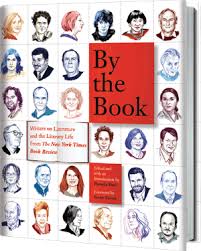
I've been going through my computer files for documents I've created for my NC book club (I miss you all!). One is a compilation of questions from the "By the Book" segment of the NYT book supplement, one of my favorite sections every Sunday. While answering them all would be daunting, they certainly delve into the reader's psyche:

What books are currently on your nightstand? Which books might we be surprised to find on your shelves?

And what’s the last truly great book you read?

What’s the best book you’ve read so far this year?

Whom do you consider the most overlooked or underappreciated writers?

What kinds of stories are you drawn to?  And steer clear of?

And what are your favorite books of all time? What’s the best love story you’ve ever read?

Who is your favorite novelist of all time? And your favorite novelist writing today?

If you had to name one book that made you who you are today, what would it be?

Is there a certain type of book you try to steer clear of as a reader? And a type of story you’re drawn to?

What are your literary guilty pleasures? Do you have a favorite genre?

What kind of reader were you as a child? Have you ever gotten in trouble for reading a book?

What was the last book to make you laugh? The last book that made you furious?

If you could require the president to read one book, what would it be?

If you could meet any author, dead or living, who would it be and why?

If you could be any character from literature, who would it be?

You’re hosting a literary dinner party. Which three writers are invited?

What’s one book you wish someone else would write?

Which books are you embarrassed not to have read yet?

Disappointing, overrated, just not good: What book did you feel you were supposed to like, and didn’t? Do you remember the last book you put down without finishing?

What book do you find yourself returning to again and again?


What do you plan to read next?

Share/Save/Bookmark

Thursday, July 7, 2016

My List of 12 Southern Writers

As I mentioned in my last post, I was motivated by Dannye Romine Powell's column to come up with my own suggestion of a dozen works by Southern writers I would recommend to book clubs (or anyone interested in a good Southern read.) The biggest challenge was deciding which book to select, once I'd chosen my author. For some I chose the most familiar, as a kind of sampler platter to encourage reading deeper in their list:


1. Harper Lee, To Kill a Mockingbird  This is one book I can read and re-read. It makes me laugh and
     cry. I love Scout and Jem and Atticus. For anyone who loves the book, rather than sending you on 
     to Go Set the Watchman, I'd suggest Truman Capote's wonderful short story "Christmas Memory"

 2.  Flannery O’Connor, Revelation” (short story) I loved teaching all of O'Connor's short stories, but 
     this one in particular does what she does best: shock us with the absurd behavior of her characters
     a split second before we recognize a bit of ourselves in them.

 3.  Eudora Welty, “Why I Live at the P.O.” (short story)  The only thing better than reading this story 
     is to listen to a recording of the author reading it! 

 4. Ernest Gaines, A Lesson Before Dying One of my teacher friends told her students this is one book
     everyone needs to read to be fully human. I can't say I disagree.

 5. Clyde Edgerton, Walking Across Egypt After I read this book (and laughed until I hurt when        
      Mattie Riggsby gets stuck in the chair), I read everything else he wrote. I still do.

 6. Ron Rash, “Hard Times” (short story)  I love everything Ron Rash writes--his novels, his poetry,
     but his short stories are pitch perfect. This one is the first story in his collection Burning Bright.      
     It's a good introduction to his writing. Then start at the beginning of his novels, One Foot in Eden
      and then the poetry.

 7.  Clyde Gurganus, The Oldest Living Confederate Widow Tells All  This sprawling novel took me a 
     while to read. Then it stuck in my head. Forever.  

 8. Donald Davis, “A Different Drummer” (short story) Davis is known for his storytelling and, 
     indeed, the best way to experience his stories is to hear him deliver them. This one from Listening
     for the Crack of Dawn is, hands down, my favorite.

 9. Tony Earley, Jim, the  Boy  This book with a young protagonist was just a perfect novel to me.
      When I read it, I had just read another book with a similar setting and young main character,
      written by a much more famous writer. This book blew that one out of the water. In my favorite
      scene, the boys uncles get him to sneak out of the house with them to watch the first electric lights 
      come on in their town.  I also LOVE the Jack Tale at the end of Mr. Tall, and I want to talk to 
      someone else who has read it.

10. Charles Frasier, Cold Mountain This is my all-time favorite book to teach in class. I read it first as 
      a reader, just for the story. Then I read it again to see the craft he used to put the story together. I
      re-read it along with my students year after year and never tired of it.

11.  Rick Bragg, All Over but the Shoutin'  I keep giving this one away to friends to read. I read Ava's
      Man first and loved it. I'm glad I got to this one too. 

12. Pat Conroy, Prince of Tides   I love all of Conroy's big, wordy novels, but this one I read first.
      I went on to read them all--Beach Music, The Great Santini, Lords of Discipline, The Water Is
      Wide. I'm sad there won't be any more.

I could start right now thinking of other Southern writers and books I should have included. I should tell you the ones to watch for:  Shari Smith', Susan Yergler-Bradburn, Wiley Cash, Ann Patchet, and lots more appearing soon at a bookstore near you!

Share/Save/Bookmark

Wednesday, April 13, 2016

Still Bookin' It!

I realize I've been missing in action here for several weeks. If you've wondered where I've been lately, I have a simple alibi: I moved mid-February.  I haven't quit reading. Of course not. But I've spent far too much time unpacking boxes, along with a great deal of pleasant time exploring all there is to do in Nashville.

Through my college roommate Susan, we were invited to join a supper club, and one of the members asked if I wanted to join her book club. (Picture me smiling.) During the time I was in Hickory, my book club was composed of people who had known me before joining the group. Some knew each other, but they all knew me. We made up our own rules (and very few of those) as we went along, so we were low on structure.

On my first meeting with my new group, I arrived at the hostess's home in Franklin in a beautiful area of this charming town. I knew only Gail, and I had met her only twice, but I liked her already.  The rest of the group was diverse. One former book club member returned after a long absence, so I didn't feel like the only newbie. A couple were from South Africa and have arranged a trip for some of the group to go there this summer.

The book they had chosen for March was When the Moon Is Low by Nadia Hashimi. The story begins in Kabul, Afghanistan, told from the perspective of Fereiba, who loses her mother at  birth and is raised by her rather disconnected father and a self-centered  stepmother, who attempts to arrange a marriage for Fereiba that will be in the stepmother's own best interest.  Nevertheless, Fereiba ends up in a happy marriage where she blossoms until the Taliban brings about changes that eventually shatter her happy home, leaving her no choice but to take her three children and to flee her home country.

From this point, Hashimi moves back and forth from the perspective of Fereiba and her son Salem, forced to grow up quickly in order to help the family slip across borders into Turkey then Greece, until they are separated and have to make their way separately to England, where they hope to rejoin family who left while the Taliban's threat level was still low.

This beautifully told story is a stark reminder of the dangers and challenges that so many refugees face while fleeing war-torn countries. As the daily news presents the current wave of Syrian refugees in terms of massive numbers, Hashimi reminds readers of their humanity.

Just a couple of evenings before the book club met, I attended a concert by Abigail Washburn and Wu Fei at a local coffee shop. The show was free, but donations to Nashville International Center for Empowerment (NICE) were encouraged.  This group helps refugees in the resettlement process, finding work and educations, as well as addressing health concerns. I was once again reminded of the power of literature to encourage empathy through individuals' stories.
Share/Save/Bookmark

Wednesday, September 3, 2014

Book Club Winner: All the Light We Cannot See

One of the advantages of being in a book club is the chance to read books I might not otherwise have considered.  Our group is not as structured as others in existence.  I love to quiz readers about how they organize, how often they meet, what they do when they gather, but most of all, how they select a book to read together.  While there are books on which I refuse to waste my time (and there's no need to name names here!), I am open-minded, especially when offered the chance to talk about a book afterwards. 

Over the years we've been a group, we've read novels, short stories, and nonfiction.  We find that we particularly enjoy historical fiction.  When some of our favorite authors publish, we are certain to select that for at least one of the next month's selections.  We don't plan more than a month in advance-- I can't even imagine setting a reading schedule for six months or a year at a time--and we often select more that one book.

Our most reason book under discussion was All the Light We Cannot See by Anthony Doerr, set alternately between Germany and France during WWII. Having taught the Holocaust course on my campus, I've read many books from this period, both fiction and nonfiction.  I don't deliberately set out to read "another Holocaust book," but the stories are fascinating and the possibilities are endless.  

This novel moves between two main characters, Marie-Laure, a French girl, blind since she was six, raised by her father, who is responsible for the keys at a Paris museum.  The German boy Werner, orphaned when his father was killed in the mines, has been raised with his sister in an orphanage, where he discovers an aptitude for working with radios. 

Marie-Laure and her father are forced to evacuate Paris when the Germans arrive, and find themselves seeking refuge in Saint-Malo on the Brittany coast with her father's brother and the maid.  The father, who has always constructed little puzzle boxes for her, carves a miniature set of the town for her fingers before he is called back to Paris, arrested on the way.

Werner, meanwhile, is admitted into an exclusive school, where he witnesses great cruelty before he is drafted into the German army at sixteen. His responsibility for tracing secret radio broadcasts by citizens of Allied countries, bring his path and Marie-Laure's together.

Doerr's depicts some of the most ruthless, self-seeking individuals, the often-unnoticed people who show great bravery through small acts of subversion, and those like Werner who must wrestle with  conscience while seeking self-preservation.  His lovely detail set me down in the rooms with his characters, hearing the scratchy recordings being broadcast, seeing the rubble, and feeling the tiny puzzle box house under Marie-Laure's fingers.


Share/Save/Bookmark

Saturday, July 4, 2009

Southern Summer Reading Challenge


Since I'm participating in the challenge on Maggie Reads blog to read three Southern novels between June 15 and August 15, it is time to post my second novel completed, Sheila Kay Adams' My Old True Love. I've mentioned the book in earlier posts, but I am giving this entire post's attention to the book. I started and finished the book--almost without stopping--at the beach this week. I chose this novel because Adams has been selected as the 2009 Ragan-Rubin Award winner by the North Carolina English Teachers Association. Although I had read her stories, I hadn't read her full-length works until now. I am so glad I did.

The novel, which I learned in her afterword was based on her family history, is set in Sodom, NC, in Madison County (known as Bloody Madison because of events during the Civil War. ) From the first page, Arty, the narrator, rang so true for me. Adams' use of dialogue, toned down, she says, with help from her editor, evoked the voices of my grandmother for me.

Sometimes when I read Southern dialect (my native tongue), I wonder how readers without my familiarity (translation: Yankees) will take to the book. Then I remind myself that when I have attended a Shakespearean production with friends who weren't English majors, that I had some of the same misgivings--needlessly. I do know, though, that you have to read with your ear. All those reading lessons about squelching "subvocalization" go right out the door.

This book handles one of the historical periods that fascinates me most, addressing the tension between sides in areas where almost no one owned slaves. The bigger story, though, is about love and family and inner demons. Woven throughout the narrative are the old ballads, or "love songs," as they've always been known in this part of the country. I was so excited to learn at the end of the book that a "soundtrack" for the book, called All the Other Fine Things, had been recorded. (Tim O'Brien, John Herrmann, and Dirk Powell did the same for the novel Cold Mountain, long before it became a movie.)

Reading this book accomplished two or three things: First, it made me long to sit down and talk to Sheila Kay Adams. I also want to talk to someone else who has read the book, just to work my way through it. It also made me want to re-read Ron Rash's novel The World Made Straight, which deals in part with the Bloody Madison episodes. Finally, I want to choose my next Southern novel.
Share/Save/Bookmark

Wednesday, June 3, 2009

Communal Reading and Personal Choices

Years ago, in an article I wish I had clipped and saved, the book editor for the Charlotte Observer bemoaned the fact that her husband, while also a reader, did not like to discuss with her the books he read. I find reflected there my own need to talk about what I read. (I suppose that's why I'm here blogging.) My first instinct upon finishing a book I enjoy (or even one that baffles me) is to suggest it to someone else who might read it and then talk about it with me. Every book doesn't fit every friend; I know that for sure. Some of my friends and family have reacted either violently against or apathetically to books I have loved.

I had dinner last night with a small book group that has been in various stages of flux for several years now. We had finished reading The Help--one everyone liked--and we were ready for the next selection. I always show up for our meetings with book lists and suggestions, but I can rarely predict what we will choose. There's a certain amount of pressure, too, in selecting a book for several people, particularly when I feel obliged to read it and to finish it by a certain date. (Usually I finish far enough ahead that I have to review my notes or start to forget character names. I do, though, remember reading the last few pages of Middlesex in the parking lot before our meeting.)

This time we decided to read Lisa See's new novel Shanghai Girls. Those of us who have been reading together the longest had read both of her previous books, Snow Flower and the Secret Fan and Peony in Love. We'd loved them both and appreciated that they were quite different from one another. Our second choice (since we only meet once a month and most of us read much more than that) is A Reliable Wife, a book my daughter gave me for Mother's Day.

Once we've made our choices for the group, we begin to discuss our other reading over the past month. Having spent a good proportion of that time driving, I had made it through several books on tape, including a particular favorite, The Devil in the White City, a nonfiction account of the 1893 Chicago World's Fair and the parallel story of the serial killer loose in the city at the time. Since I'm heading to Chicago soon, this gave me some ideas of places to visit while there.

I also listened to Jane Smiley's Horse Heaven, a novel about race horses, their owners, breeders, and trainers. Even the horses' personalities emerge through her novel. My lightest fare was an abridged version (I hate those but happened to have it on hand when the others ran out) of Peter Mayle's Hotel Pastis. His books all make me want to travel--and to eat French and Italian food.

So far, I've found willing listeners to whom I've passed along the tapes. Now I can slip back into my corner with a book of my own choosing.
Share/Save/Bookmark