Showing posts with label reading. Show all posts

Wednesday, January 7, 2026

Creating a Sense of Place

 One of the books that most captivated me I'm 2025 was Ocean Vuong's most recent novel The Emperor of Gladness. The story of Hai, a young Vietnamese American, opens with a rich description of East Gladness, Connecticut, the town where he lives. Even before Vuong introduces readers to his quirky cast of characters, who become chosen family, he sets the stage.

As I read the opening chapter, I thought about how readers sometimes skim over the descriptive passages, eager to get to the action, as if it's no more than filler. I know I've probably done the same. But Vuong drew me in immediately, making real a place I've never visited--in a state I've never visited. The introduction felt like a promise that the writing to come would measure up; it did. I often forget a lot about books I read, once I've moved on, but I have clear images of the streets and businesses of East Gladness. I know the little house Hai ends up sharing with Grazina, the elderly Lithuanian immigrant who essentially saves his life while she is losing her grasp on her on. Vuong's insight into human nature proves as keen as his eye for the details of the place in which he sets his story. 

Patrick Ryan's novel Buckeye, my first book completed in 2026, began similarly, with a description of the fictional town of Bonhomie, Ohio. The description of the town in the early part of the twentieth century bore no resemblance to East Gladness, CT, but if literary descriptions were works of visual art, the two chapters would hang in the same wing of the museum. As the characters grow up and grow old, the change in the town is reflected: the hardware store where Cal works for his father-in-law increases in size, the plant where Felix Salt worked in management before he left for the war also thrives; neighborhoods grow and merge, so that when Margaret Salt returns after a twenty-year absence, she is aware of the changes in a way that those who never left may be unaware. The reader takes note.

When teaching reading or writing, I often talked about how setting can be very specific--Bonhomie, OH, from WWII through the Vietnam war--or general--long ago and far away. The latter lets readers pick and choose from their own memories or imagination; the former can take a fictional time and place and set the reader right down in the middle of it. When done well--as in these two novels--it works.


Share/Save/Bookmark

Sunday, January 4, 2026

What "Counts" as Reading?


 I love how passionate readers are about their own opinions as to what counts as reading. I missed the recent guest editorial by Brian Bannon in the New York Times Book Review entitled "Do Audiobooks Count as Reading?" However, I did catch the passionate letters written in response that were published the next week.

People get worked up about the topic, as well as whether physical books are superior to ebooks. I'll start by suggesting that it's okay to make that judgment for oneself but not for others. In my earliest years of teaching, I remember suggesting that a student with reading problems try listening as he read. He had better comprehension and retention than many of my students who had no learning disabilities. 

When my husband moved from Alabama to North Carolina in September while I stayed behind to let my children finish out the school year, I relied on books on tape for the long eight-hour drives on weekends when I visited him. I went from Cracker Barrel to Cracker Barrel where I could buy an audiobook, then turn it back in for a prorated refund based on how long I had it. I graduated to books on CD and then discovered the Libby app that gives me access through the public library (supplemented by Audiobooks.com and the Chirp app). 

I also had one of the earliest eBooks--the Sony version that predated Kindle and Nook--then went on to read on my iPad or my phone.

Yet I continue to buy books and to check out physical copies. I keep several going at once. 

I knew that the eBook experience was comparable--for me--when I would catch myself licking my finger to turn the page. And to answer one complaint about electronic books: Yes, I generally read with a very sharp pencil tucked behind my ear, so I can underlining favorite phrases or make notes in the back. I had to adapt with eBooks and audiobooks.

Last spring, my granddaughter rode with me to the beach as I listened to Abraham Verghese's Covenant of Water. At one point, one of the characters said something particularly poignant. Avery paused the audiobook, took my phone, and typed the quote into my phone notes page where I keep just such quotes. She knew I would want her to capture that one before I even asked. 

Sometimes an audiobook will be so moving that I buy a physical copy to keep, just so I can go back to favorite parts--or read again. But as I compile my list of books read at the end of each year, I include them all because, I have discovered, I can't always remember if I read or listened to a particular title. Since I already subvocalize (a habit speed reading coaches discourage), I already hear all the voices even when I read words on a page. 

Audiobooks make traveling alone more of a pleasure. I can often remember right where I was when I heard a particular passage of a book. (When I was listening to Familiaris in a Wal-Mart parking lot in Lenoir, NC, I remember a particular wave of grief I shared with the protagonist. )

I think of the Israelites in the Old Testament, standing as listening as the sacred texts were read to them. I think of books for the blind. I remember Mrs. Knott reading aloud every one of Laura Ingalls Wilder's Little House series.  You can decide for yourself what counts, but those counted for me.


Share/Save/Bookmark

Sunday, June 22, 2025

It Happened on a Train: Summer Reading

Summer, for me, is a marathon reading experience. I maintain a list of books I want to read next, but the list grows and changes. I certainly don't go in any kind of order. In fact, sometimes a book presents itself out of the blue. 

This summer, I saved the "Summer Reading Bucket List" from the Next York Times Book Review earlier this month. Rather than helping me choose books, I use it to mark those I've read that fit the criteria. As a result, though, the selections vary widely. Nevertheless, I am always amused to see the threads that tie my reading together.

Most recently, I read Emma Donoghue's novel The Paris Express, a departure from other books by her I've read--particularly Room, which haunts me still, and Frog Music. This novel follows an ensemble cast of characters heading on a train toward Paris. There is an American artist, a young woman studying medicine, a woman who goes into labor, a young boy traveling alone, employees of the railroad, and a young woman who plans to celebrate her twenty-first birthday by blowing up the train, particularly when she is assured there will be three members of Parliament aboard before they read their destination. 

I'm reminded of Ann Patchett's suggestions that all of her books follow the formula of Canterbury Tales: Take people from different walks of life, put them together, and see what happens Based on an actual train disaster in 1895, the author explores the political climate in France as well as some of the fears tied to time and speed. 

The next book I picked up, eager to read it as soon as it was available, was Fredrik Backman's latest book My Friends. (So I get to check off "Read a book in translation.) If both these novels were made into movies, the same actress might be cast in both. In Backman's book, Louisa has just fled her group home on the day before her eighteenth birthday, still grieving the loss of her only friend there. 

She slips into an art exhibit to see a painting that has fascinated her most of her life, since she first saw it reproduced on a postcard she carries with her. Suspected of planning to deface the painting, she escapes into an alley, where she encounters what at first appears to be a homeless vagrant. He is The Artist (as he is called for most of the book). Near death, he commissions Ted, one of his childhood friends to take his life savings to buy back the painting. Then he tells him to give it to Louisa. 

The gift is too much for her. Though Ted is least equipped to deal with the socially awkward teenager, the two end up riding together on a train toward the seaside town and the pier depicted in the painting. They carry the painting and The Artist's ashes, and the back story unfolds. Louisa has to remind Ted that while the story is an old one for him, it is happening in the moment for her.

Anyone familiar with Backman knows that while his stories vary, his skill at developing quirky, engaging characters is a constant. He explores similar themes: the power of love and friendship, friends that are family, with some of the most lovable curmudgeons. Even the minor characters, both the heroes and the villains, come to life.

Maybe what I need is a long, slow train trip with a big bag of books.


Share/Save/Bookmark

Sunday, March 2, 2025

Prequels: The Ultimate Spoiler Alert


Narratives told out of chronological order are nothing new. After all, Sophocles wrote Antigone about twelve years before Oedipus Rex. C.S. Lewis' Narnia series was likewise written out of chronological order. So when I learned that David Wroblewski had written Familiaris, a prequel to The Story of Edgar Sawtelle, one of my all-time favorite novels, I couldn't wait to read it, but I was concerned about knowing too much.

Familiaris is the story of Edgar's grandparents John and Mary Sawtelle, the original breeders of what become known as Sawtelle dogs. Like the earlier novel, this one is not only lengthy, but grand in scope. While the first novel was a modern retelling of Hamlet, this one does not seem to have such a direct literary origin. 

Wroblewski has assembled a big cast of characters--two childhood friends of John, who come with them to the farm they purchase after becomes across it while waiting on his car too cool off. Their quirks are endearing and surprising. Frank, who lost a leg and arm in the war, is justifiably curmudgeonly. The large and taciturn Elbow discovers his own talent with woodworking, but his charm is his shifting personas--the Man Who Agrees with Everything, the Man Who Questions Everything, and so on.

Throughout the narrative, the author weaves in subplots, the earliest, the man who first tamed wolves; the most significant to the plot, Walter Payne, and Ida, the newborn he discovers in a raging wildfire and takes to raise. The supernatural element of her strange gifts are a small but curious part of the plot.

I knew to anticipate the birth of John and Mary's sons, Gar and Claude, since they are major characters in Edgar's story. Wroblewski's characterization of Claude, in particular, allowed me to be cautiously sympathetic with the boy, despite knowing the role he plays in the future.

Familiaris, above all, is a beautiful love story--John and Mary, naturally, but also their love for the dogs they raise, extending long after sending them to new homes, and from beginning to end, the love under the surface of John, Elbow, and Frank. Wroblewski varies his narrative style from time to time, sometimes almost mythical, sometimes epistolary, but he beautifully captures human nature, particularly the pain of loss.

I suspect I'm going to be re-reading The Story of Edgar Sawtelle, if only to visit the dog Almondine one more time.


Share/Save/Bookmark

Sunday, July 7, 2024


 One of my strongest-held beliefs is the power of fiction to increase our empathy as we inhabit others' lives. I'd go so far to say that reading fiction is, at least for now, the best way to time travel. Books have taken me to places I might eventually visit, but they have also taken me to other decades and centuries.

I read There, There, the earlier novel by Tommy Orange for which his latest, Wandering Stars, serves as both a prequel and sequel, when it first came out. Now I feel the urge to read it again, even though some parts of the novel are embedded in my brain. 

Wandering Stars starts after the 1864 Sand Creek Massacre, with the story of Jude Star, ancestor to the characters that make up most of the narrative. Orange helps to fill out the complicated history of the country's attempt to "reeducate" Indigenous children, purportedly to "Kill the Indian, Save the Man." 

The stories of extreme abuse in these boarding schools where families were forced to send their children can be found in a number of other novels. Orange follows the family lineage, picking up after the shooting at the Oakland powwow chronicled in There, There. Orange picks up with story lines of some of the characters in that story, but focuses on Orville Red Feather, now dealing with addiction to pain meds after being shot there. His friend Sean, an adopted boy who has recently lost his mother to cancer, finds through a DNA test that while he always assumed he was Black, he has a percentage of Native American blood. 

The novel deals with addiction, while examining identify and family connections. What struck me as I read, particularly since I have read such a range of books this summer, was how beautifully Orange tells the story. Even the references to the wandering stars--literal and figurative--are woven in with such a subtle hand. The book is also a reminder of the power and the necessity of reading books that make the reader uncomfortable.


Share/Save/Bookmark

Wednesday, March 6, 2024

Urrea's The Hummingbird's Daughter


 When I first encountered Luis Alberto Urrea, I read his novel House of Broken Angels, and was particularly fascinated with how well he wrote from women's points of view. The book was a modern family tale complicated in the way families are. I went on this year to read Goodnight Irene,  the story influenced by his mother's experience as one of the Red Cross "Donut Dollies" during WWII.

I stumbled across The Hummingbird's Daughter and started listening to the audiobook, unaware when the book was written. Only after I finished did I learn that it had been awarded the Kiriyama Pacific Rim Prize in 2006--not a new book after all. But this one is another sprawling tale, this time set in Mexico in the late 19th century. Teresita, the main character, was born to a poor 14-year-old Indian girl and abandoned with her abusive aunt before Huila, the local healer--considered by many a witch--takes her in as her apprentice

Eventually, she comes to the attention of Don Tomás Urrea, the wealthy rancher. The relationships between the different social classes is complicated since Urrea, a philanderer, is the apparent father not only of Teresita but other children as well. The book is reminiscent of the works of Gabriel Garcia Marquez. When she is fatally attacked but returns to life before her burial, the attention draws swarms of pilgrims hoping for healing. 

Urrea worked almost twenty years on the novel, based on historical characters to whom he may share kinship. He explains in the afterword that in some areas Teresita is still revered as Saint of Cabora. The writing is particularly strong, with well-drawn, layered characters and details both powerful, painful, and at times, humorous. 

Before I was halfway through the book, I was thinking of friends to whom I needed to recommend it. That's the ultimate reading experience--one I want to share.


Share/Save/Bookmark

Thursday, January 11, 2024

A Favorite from the End of 2023: Ken Follett's The Armor of Light


My first encounter with the writing of Ken Follett was his first sprawling tale Pillars of the Earth, published in 1989, which I read at least twenty years ago. While some books I read just months ago have escaped my memory, this one remains firmly planted. He begins in Kingsbridge, a fictional English village, during the Middle Ages, introducing Jack the Builder, who aspires to build a great cathedral. 

Follett not only brought the actual construction to life, but he created some of the best-drawn memorable characters. His protagonists, even when flawed, are endearing. His villains are despicable, even though he often builds the back story that explains why they act the way they do. The story is steeped in history, presenting the conflict for the British throne, and leads up to the murder of Thomas Becket in Winchester Cathedral.

More than twenty years passed before Follett published World Without End, the next in the series, followed by Column of Fire. In the meantime, he has written thrillers, as well as another series, the Century Trilogy. The Armor of Light is the fourth in the Pillows of the Earth series picking up in the same area in the late 1700s, focusing on the weaving industry and the impact of the Industrial Revolution, as well as the Napoleonic Wars.

Again, I learned a lot about a part of history that was less familiar to me, while meeting a cast of characters I loved and hated. Sal Clitheroe, a spinner, loses her husband through an accident for which his employer Will Riddick is responsible. A survivor, she ends up being forced to leave the village with her son Kit, because of Riddick. Amos Barrowfield is a forward-thinking cloth merchant who champions the cause of his spinners. David Shoveller (known as Spade) is a clothier, whose life is intertwined with the characters as well. Alderman Hornbeam is the major antagonist of the novel, with his brand of justice never allowing for even a glimmer of mercy.

Follett has a knack for developing suspense. Only the most optimistic reader would not anticipate some of the heartbreaking events of the story, but Follett shines a light on some of those who use their intellect to overcome, not only for themselves but others.

Follett's books are always weighty tomes that would serve well as doorstops, but I never grow tired of them whenever I visit this part of world history.


Share/Save/Bookmark

Saturday, July 29, 2023

More Reasons to Love Historical Fiction


My reading this summer has been as eclectic as ever, but I find that when asked to recommend a book to someone, I often turn first to historical fiction. Often I am not sure until I finish and read the author's notes whether the story is based on fact. A good story can stand on its own, after all, but the historical basis gives me a good excuse to do a little digging.

One such novel I particularly enjoyed is Lynda Rutledge's West with Giraffes, a journey tale in the spirit of Towles' The Lincoln Highway or Krueger's This Tender Land--or Twain's Huckleberry Finn. Set during the Dust Bowl, with a frame story in the near future, this is the story of Woodrow Wilson "Woody" Nickels, who as a boy left his Texas home after losing his family, victims of the Dust Bowl. He makes his way to New York to find a cousin about the time a hurricane hits the area. 

At the same time, two giraffes on their way to the San Diego Zoo are caught in the hurricane, which injures the female "Girl." Woody, at not quite sixteen, convinces the zoo employee charged with taking the exotic beasts across the continent in a rickety truck that he is capable of driving them. Rutledge also introduces a female photographer desperate to publish her photos and stories of the trip--one of many items on her bucket list--who follows the truck and strikes up a friendship with Woody.

In the frame story, Woody at 105 lives in a nursing home where he fantasizes images of the giraffes peering in his window while he works desperately to write his story before his time runs out. 

Even without the historical basis, Rutledge weaves a compelling story. Background details (and photographs) of the giraffes en route, as well as details about the iconic Belle Benchley, the zoo's first female director, accessible online, add to the story's charm.

When I heard Luis Alberto Urrea had a new book, I was eager to read it, having thoroughly enjoyed his novel The House of Broken Angels. One thing that struck me about the earlier novel was his convincing portrayal of his female characters. 

In Good Night, Irene, Urrea draws from his own mother's experience as a "Doughnut Dolly" working for the Red Cross about a Clubmobile during World War II. The title character Irene is a city girl who leaves behind a wealthy but abusive fiancé to join the war effort. She is paired with Dorothy, strong-willed and sharp-witted Midwesterner. 

Rather than staying back out of harm's way, the women follow the troops through France after D-Day, often witnessing horrific warfare at risk to their own lives. While Urrea includes a cast of characters, these two friends are central to the story, and they are evidence of the author's skill at characterization.

Again, the author's notes that follow the narrative explain how much of the story was inspired by Urrea's mother's story, offering a glimpse into one of the rarely highlighted roles in keeping up the spirits of the troops. With Urrea's skill at taking inspiration from his own family experiences, his readers will hope he has a vast well of stories from which to draw for his next novels. 


Share/Save/Bookmark

Thursday, July 6, 2023


 Like most voracious readers, the last thing in the world I need is to add to my "to read" list, but I can't resist someone else's reading suggestions. This week, at the bottom of a list of suggestions of short books, I came across mention Ian McEwan's novel Nutshell. I have no idea how it escaped my attention this long, since it was published in 2016.

The protagonist of the novel is Hamlet--as a fetus--in modern-day London. He is the ultimate insider--pun intended. The action covers two or three days in the last couple of weeks before his mother Trudy is due to deliver. Young--very young--Hamlet, with his ear pressed against the uterine wall, is privy to the conniving of his mother and her lover Claude, whom he realizes is his father's brother.

His father John is a poet who runs a small publishing house, while his younger brother has more financial success. As the book opens, Trudy has moved her husband out of the house while she is "on a break." 

One could probably read and even appreciate the novel with only passing familiarity with what is arguably Shakespeare's most famous play, but for those who have studied the play or taught the play (dozens of times), the pleasure of recognizing not just lines lifted from the play, but suggestions of themes. Hamlet's world-weariness is, in this case, fed by secondhand exposure to his mother's podcasts. He also experiences secondhand exposure to her increasing alcohol intake as the situation grows more complicated. 

Considering the book was published pre-Covid, some of the references to current issues are fascinating--including conflict between Russia and Ukraine, gender ambiguity, climate issues, and increasing violence. McEwan's unborn protagonist with his astute sense of observation, self-awareness, and impressive vocabulary comes across as far more than a gimmick. 

I am glad I encountered the audiobook first, but I suspect I will need to add a hard copy of the book to my library so I can revisit the story to see how many allusions I missed.


Share/Save/Bookmark

Sunday, January 8, 2023

Demon Copperhead: Kingsolver Always Delivers


I know I promised to share highlights of my 2022 reading, but I finished Demon Copperhead, Barbara Kingsolver's latest novel, on New Year's Day, and I am still thinking about it.

The title (and the author's notes) invite comparison to David Copperfield, but in anything but a derivative way. Set in a poor town in what had been Virginia coal mining country in modern day, the title character is one of the most compelling narrators I've read in awhile.  I wouldn't go so far as to call Demon a naive narrator, though his  youthful perspective is part of the attraction. I'm tempted to listen to the audiobook to see how that voice translates.

I've long been a fan of Kingsolver's novels. I've read everything she's written, including her poetry, starting with The Bean Trees. Reading her novels always led me to slow down and pay attention to her writing chops. Unlike some books I read when the author's process gets in the way of the story, Kingsolver's novels make me just a bit envious of how she uses literary elements in a way that seems so effortless and natural.

The protagonist was born to a teenage mom and named Damon, which naturally was changed to the nickname Demon by the time he got to school (as his best friend was stuck with the nickname Maggot.) In a series of misfortunes, he experiences abuse and neglect by his mother and stepfather, leading to a years or rejection and loss. Demon shows the dark side of foster care abuse and pitfalls of the systems intended to protect children.

This is also a story of drug and alcohol abuse, which is often so rampant in areas of economic decline. I recently read Margo Price's memoir Maybe We'll Make It, in which she writes candidly of some of the similar patterns of addiction she fell into. 

While Demon Copperhead is a hard read, it is not without hope. A number of caring, though flawed, people offer him surrogate family, encouragement, and opportunity. Two of his teachers, a mixed-race couple with whom he maintains contact, are examples of the power of educators who not only see their students but are willing to be seen as people. And who can't love characters who name their dog Hazel Dickens?

As I made my list of books I read last year, I was struck again how some slip away right after I read them, and others stick with me. I think I'll be thinking about Demon Copperhead for a long time, and I can't wait to have the opportunity to talk about it with my reading friends.


Share/Save/Bookmark

Sunday, November 27, 2022

Shrines of Gaiety by Kate Atkinson


 Whenever I finish a book by Kate Atkinson, I realize I need to read all of them. Shrines of Gaiety was no exception. I was first introduced to Atkinson with Life after Life (published the same year as Jill McCorkle's wonderful novel of the same title). In that book, Atkinson was able to pull off her stunning plot twists--or splits--without coming across as gimmicky at all. The sequel Gods in Ruins, with the brother of the protagonist of Life after Life in focus, was just as cleverly plotted but in a fresh way.

I also found Transcription worth reading. I realize that while some books I read don't take root, hers stick with me, even small details. Her latest, Shrines of Gaiety, is set in post-WWI London. It opens with the release of Nellie Coker from prison on liquor license charges, returning like a celebrity to continue running her businesses--bars and restaurants servingas fronts for her other illegal endeavors. No motherly figure, Coker nonetheless has produced a number of offspring--two sons and four daughters--whom she is putting into position to run her shady empire, to mixed results.

Into her world, Atkinson introduces two runaway girls from York--Freda, an aspiring but mediocre actress, and her best friend  Florence, who comes from a better family but lacks street smarts. Atkinson introduces two other important characters--Gwendolyn Kelling, a nurse during the war now working as a librarian, and Frobisher, the London detective to whom she turns to help find Freda, the half-sister of her friend. 

Some have compared Atkinson's development of the novel's setting as Dickensian. She weaves small historical details through the story in an intriguing way. After King Tut's tomb was disturbed, for example, all things Egyptian are the rage, while much of London fears the curse unleashed in the process. She depicts the debauchery of young revelers, regularly throwing costume parties as an excuse to disguise themselves as Pierrot or as adult-sized babies, the disappearance of disposable young women caught up in Nellie's seedy business, and the levels of corruption of law officers.

What I enjoyed most, though, was Atkinson's ability to write one great sentence after another. She makes me want to underline in my hardcovers or call someone to read aloud. She makes me want to read something else she has written. 


Share/Save/Bookmark

Saturday, October 22, 2022

Stephen King's Fairy Tale

I haven't read all of Stephen King's works, but the more I read, the more I wonder why not. Misery was the first of his novels I read--during my postpartum period after the birth of last born. At the time, it was a nice diversion to what was on television: the Iran Contra hearings.

In recent years, though, I've read Mr. Mercedes and its sequels, November 22, 1963Billy Summers, and King's On Writing, which I consider a valuable contribution to writing on writing. One perk, too, is that some of my students who would not otherwise consider reading a book about writing will read a book about writing by Stephen King. 

As I read his works, and as I read about his writing from Stephen King fans, I realize that having more of his books under my belt would be rewarding since he has so many subtle self-references throughout. I know Billy Summers was set in part within view of the ruins of the setting of The Shining, and I am told that he weaves references to his previous works throughout November 22, 1963.
 

King's novels, always heft, require an investment of time. In print, they are suitable for doorstops. On audio, they are easily twice the length of the average bestseller. I suspect true King fans never complain about the length any more than Harry Potter fans might have wished each successive novel were shorter. No! Give us more.

King's latest novel Fairy Tale begins as a deceptively realistic coming of age novel, as Charlie Reade, a high school junior has survived his mother's death in a freak accident and his father's alcoholism and return to sobriety. The anomaly in the small town setting is Howard Bowditch's house, the rural Illinois equivalent of Boo Radley's house. Overgrown and unkempt, the house is also guarded by Radar, Bowditch's fearsome German shepherd.

Charlie's first encounter with Bowditch occurs when he heard the dogs plaintive barks and the softer sound of the old man calling out in pain. Despite his wishes, Charlie is hailed as a local hero for saving the old man, and an odd friendship is born as he takes care of the aging dog while the old man is in the hospital to repair his badly broken leg. 

But Charlie hears a strange sound coming out of the padlocked shed. Yes, this is a Stephen King novel after all.

Through strange revelations from the old man, Charlie learns of a portal to another world, a fantasy world. As he descends the spiral stairs to a land he learns is called Empis, the story begins to feel more like a Harry Potter story for adults. King creates a believable other world, even as Charlie--Prince Charlie--feels the tension between the two world.

When all is said and done, however, this is a story of how far boy will go for the love of his dog.


Share/Save/Bookmark

Wednesday, October 19, 2022

Book a Day Challenge


 Disclaimer: While I refused to sacrifice reading for pleasure when I started my doctoral program, I have let it cut into my book updates here, which shames me. After all, one of the greatest pleasure of reading is sharing and discussing what I read with others. To that end, I plan to post a book note every day until I have posted about all the good books I've read since my last post. The posts will not be in order as I read the books but instead as the push their way to the front of my brain.

One of the books that caught my interest most recently was Margaret Verble's novel When Two Feathers Fell from the Sky. My interest was due impart to the setting of the novel, the early 20th century, when the Nashville Zoo was located in what is now the Green Hills area, near where I teach, in fact.

Two Feathers is a young Cherokee woman whose job at the Glendale Park Zoo is horse diving. The cast of characters includes Shackleford, whose company runs the zoom and whose family lives in Longview Mansion, right on Caldwell Lane near my campus. Two Feathers' closest friend at the zoo is Crawford, a Black employee who cares for her horse. Verble develops several secondary characters, such as Clive the zookeeper who is still haunted by his WWI experiences, a number of the young women who entertain crowds at the zoo, including two sisters two throw (and sometimes drop) plates. The antagonist Jack is obsessed with Two Feathers, spying on her from a tree near her window and even letting a monkey loose in the girls dormitory to tie him a chance to get into her room.

An interesting aspect of the novel is the way Verble weaves elements of magical realism into the narrative. Clive sees ghosts of his cousin who served in the war with him, and Little Elk, the spirit of a young Indian whose life was cut short, appears to several characters. The animals themselves are characters with personalities, and Two Feathers feels a particular link to them and empathizes with their suffering.

The peek into historical Nashville is a perk for those of us who live there. As I head north on Granny White Pike now, I think of the buffalo run that was once there. I'm planning to locate the old bear caves on Scenic Drive and Clive's stone house on Lealand Lane. 


Share/Save/Bookmark

Thursday, May 26, 2022

Nonfiction Choices of the Summer Reading List

I never deliberately balance my nonfiction reading with fiction, but I find that I work my way through more nonfiction these days than in the past. One book that drew my attention was The Betrayal of Anne Frank: A Cold Case Investigation. I find that the diary itself holds up to re-reading every few years, and I have also read a number of books that fill in some of the blanks about the short life of this child whose writing was evidence of such a bright mind. I even enjoyed the novel The Boy Who Loved Anne Frank, based on the false premise that Peter actually survived the war and lived to adulthood, keeping his past a secret in the U.S. Sullivan goes into some detail about the actual experience in that attic space, but goes further as a modern team followed up leads, using up to date technology, to determine who might have informed the authorities about their hiding place. While the conclusions are not absolute, the author and the team of investigators put forth substantial evidence about the guilty party. They also suggest that Otto Frank and Miep Gies also knew of the identity but ever revealed the information out of an instinct to protect the family of the person responsible.

 In a totally different vein, I enjoyed Carole King's memoir A Natural Woman, which follows her life, tracing her success as a songwriter and singer, as well as detailing her personal life. I am always shocked to be reminded just how young she and Gerry Goffin were when they began penning their mega-hits. Rather than a tell-all in which she spills the dirt on others whose paths crossed her, this book is usually generous to other she knew but sometimes painfully honest about her own life choices. Details of her performance as part of James Taylor's band was a stunning reminder of all the talented musical arts who supported one another during their heyday. The book begs for a companion playlist. 

Michelle Zauner's memoir Crying in H Mart, which began as a New Yorker essay explores the complicated dynamics between mother and daughter, compounded by culture. Zauner, the Korean-American lead singer of the indie rockers, Japanese Breakfast, particularly explores the strong sensory connection between familial ties and food. For book clubs that pair meals with books, this memoir provides a perfect culinary opportunity. After reading Lisa See's Island of the Sea Women and The Girl with Seven Names by Lee Hyena-seo, one fiction and the other non-fiction, I am beginning to crave kimchi.


Share/Save/Bookmark

Thursday, March 31, 2022

Range by David Epstein: Good News for Generalists


I get the best book recommendations from people who know me well. Since I've started my new journey toward an Ed.D in Educational Leadership, I am reading a disproportionate number of academic texts. I love fiction. I love a good story. Somehow I must find a way to satisfy that urge too.

Recently, a friend I've kept up with who is also in higher education recommended David Epstein's book Range: Why Generalists Triumph in a Specialize World. I was barely into the book before I wanted to write a letter to the author and started thinking who needed to read the book along with me. 

I am an unapologetic universalist. (Well, I do apologize a little.) It says a lot that I have an undergraduate degree in accounting but have taught English for more than 30 years (not counting the time I spent teaching Lamaze childbirth and aerobics and selling real estate.) Even now, knee deep in my dissertation process, I find myself pursuing all my other interests. I'm still going to concerts, listening to great music, and writing about it. I mentor a student teacher, three young moms, and a thirty-something single who lets me borrow her cool jackets. I still sew, particularly handwork. 

Epstein opens the book Range with a side-by-side comparison of Tiger Woods and Roger Federer. Woods was primed for his golf career practically from birth; Federer tried out lots of sports. Things worked out well for both.

The book is full of stories that confirm what I've suspected all along. The best decisions are made, the toughest problems are solved with a variety of minds working together. Austin Kleon's books (such as Steal Like a Genius) would be perfect companion reads to this book.

Epstein reassures me that quantitative research alone cannot, should not rule the world. Ask those NASA scientists with "In God We Trust; Everyone Else Must Show Data" on the wall--and the Space Shuttle disaster on their resumes. 

What I loved most about this book is the opportunity to talk further about it. There are so many implications for the classroom, for example. I look forward to lots of ripe conversations as soon as my book people indulge me and check it out for themselves.


Share/Save/Bookmark

Monday, January 24, 2022

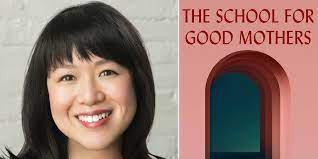
The School for Good Mothers: Amy Tan Meets Margaret Atwood


Even though some of the reviews had prepared me for the futuristic turn in Jessamine Chan's novel The School for Good Mothers. The author does not delay throwing the reader into the story on 39-year-old Frida Liu's "bad day," in which she leaves her fussy toddler daughter Harriet home alone to run for coffee, turning into a two-hour diversion. When the neighbors hear the girl crying and call the authority, the child is taken into protective custody and turned over to her father, Harriet's ex-husband and Susanna, the young Pilates instructor for whom he left Frida. Working with the same lawyer who represented her in the divorce, Frida meets challenges arranging chaperoned visits with her daughter with the social worker. She has to endure cameras placed throughout her apartment, part of a new program being test-piloted in the Philadelphia area. 

Even with the Big Brother atmosphere established before the court date, readers will still be shocked when Frida not only doesn't regain custody but is sent to a training camp for "bad mothers" on a former college campus. The women there are forced to chant, "I am a bad mother, but I am learning to be good." The manipulation by the pink-uniformed attendants is unnerving, but when the women are issued robotic children simulating their own children for their re-education, the story takes a heart-wrenching turn for the creepy. 

Frida's interaction with the other women takes on the feel of women's prison, and her growing tenderness toward the "doll" child she calls Emmanuelle is testament to her yearning to be reunited with her own daughter. The difference in age and ethnicity plays a role in the dynamics. As the only Asian mother in the school, Frida is often odd woman out. 

In light of the current less-than-ideal system caring for child welfare, Chan's novel shows what can go wrong when the pendulum swings too far in the other direction and experimentation ignores human realities.


Share/Save/Bookmark

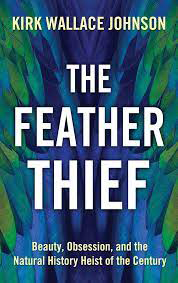
The Feather Thief: Truth Is Stranger than Fiction


 January is off to a good start as I have read such a variety of books. One that fascinated and surprised me was Kirk Wallace Johnson's The Feather Thief, the true story of a heist at the Britain's Natural History Museum in the small town of Tring. Johnson was working to draw attention to the security and safety needs of Afghanis who had cooperated with U.S. Troops when this unusual story was brought to his attention during a fly-fishing excursion. 

He became obsessed with the story, starting with Alfred Russell Wallace, who spent years collecting rare and colorful bird species for the museum, while simultaneously with Darwin developing the theory of natural selection. After losing years of work when a fire broke out aboard the ship when he was returning with his collection, he returned to Malaysia to focus on the Birds of Paradise.

Johnson also provides historical background on the eventual movement to protect the beautiful but rare bird species after so many were collected for women's fashions. The account of a cape made from thousands of hummingbird bodies was enough to give me pause.

The anti-hero of the story Edwin Rist was a young American flute player studying music in England. His interest in music, however, was rivaled by his obsession with salmon flying tying. In that world, he was something of a prodigy. When he learned of the variety of feathers and bird skins stored in drawers in Tring, he broken in through a window and escaped with more than a hundred rare birds. (This is no spoiler alert, since the book opens with the heist.)

While it took the museum weeks even to know the birds had been taken, Rist was eventually brought to justice but let off with barely a slap on the wrist. Johnson, realizing many of the stolen birds were unaccounted for, took on the mission of tracking them down and finding the complete story. 

I knew about other art thefts--the Isabella Stewart Museum, The Scream, Mona Lisa, but this was a new story to me. Having recently read Rachel Joyce's novel Miss Benson's Beetle, about the search for a rare insect, this true story fascinated me with the drive to find unusual creatures in order to attempt to save them.


Share/Save/Bookmark

Friday, September 10, 2021

Best of the Fiction Stack


A look back at my list of most recent books assures me that I've managed to keep a steady diet of good reading, even when I have more to read than ever for school. I have always enjoyed a book that gives a glimpse into the lives and work of great artists. Nothing enables time travel like a good book either. Laura Morelli's novel The Night Portrait follows multiple perspectives in two time periods: Much of the story takes place in Milan, Italy, during the 13th century, following Leonardo da Vinci and one of his few portrait subjects Cecilia Gallerani, captured by the master in "Lady with the Ermine"; the other storyline takes place during WWII, following Edith Becker, a German art conservator pressed into serve by Hitler's regime to locate works of art owned by wealthy Jewish families to add to the German collection, and Italian-American soldier Dominic Bonelli, assigned to guard the Monuments Men, who were working to protect art and architecture and locate stolen works.

I read the book Monuments Men before the movie was released and was particularly fascinated to learn that one of the real Monuments Men, Robert Posey of south Alabama, shares ancestors (named in the book) with my husband's family. 

Morelli weaves the story lines together smoothly. Edith feels guilty for her unwitting role in stealing art from private owners, particularly when she discovers that many pieces end up not in German museums but in the private collections of high-ranking Nazi officers. She decides to take the risk of keeping records of works taken, their owners, and their place of "safekeeping." Bonelli has a natural artistic talent, but questions putting soldiers in harm's way to safeguard art, not lives. His desire to return home to his wife and daughters, one he has yet to meet, exists in  tension with his realization of the importance of art to human beings.

Leonardo, caught in the intrigue of a palace where he is painting the mistress at the time the Duke weds, comes across as an interesting, multi-dimensional character. Cecelia's story is a variation of the that of many women whose future is decided by others, often fathers and older brothers. 

Another novel that kept me reading recently is Catherine Lowell's novel The Madwoman Upstairs. The protagonist Samantha Whipple is a young woman in her early 20s, the last living relative of the Brontes. Raised and educated by her father in Boston after her parents' divorce, she arrives at Oxford, where she is placed in a dorm room in the "Tower" in a part of the old school that is a regular stop on campus tours 

Having lost her father prematurely in a fire, she seems to be looking for the part of him left behind. While the world speculates about her supposed inheritance, Sam is baffled as one by one, his father's personal copies of the Bronte sisters' novels appear in her room.To complicate matters, Dr. James Orville, her tutor (or don) challenges her every idea about literature, while avoiding the Brontes as long as he can.

Though I haven't Googled for confirmation of my theory, as I read the novel, I realized that Lowell must have engaged in academic research on the Brontes. The novel has material that could, instead, have been a dissertation. Samantha's conversations during tutoring session with Orvilles, as well as in her interior monologue, explore a variety of interpretations of literature, the Bronte works in particular. She and Orville argue about reliability of narrators, the meaning of text, and the value (or lack of value) in reader response theory. All of the literary talk is supported by direct textual evidence, making me think of re-reading Jane Eyre and Wuthering Heights, and picking up The Tenant of Wildfell Hall. 

Sam, the novel's protagonist is socially awkward, certainly missing opportunities to make new friends at Oxford in favor of following her own muse and trying to discover what her father wanted to tell her. Lowell incorporates some plot turns that require a willing suspension of disbelief. The romantic story line is less plausible. Teaching in a college environment myself, the teacher-student complications set me on edge a bit. Sometimes Samantha isn't even very likable--but she is curious, courageous, and willing to try different perspectives. I learned a few things about the Brontes and their works as well that 'd much rather have learned reading a novel than a dissertation.

I got the suggestion to read Pickard County Atlas by Chris Harding Thornton from a former colleague who regular pops up in my messages with great book selections. I had trouble finding it at first because autocorrect had changed the title to Pickle County. The novel's main character Harley Jensen is a deputy sheriff in a small town in the Nebraska Sandhills still haunted by his mother's suicide. The story opens just as the patriarch of the Reddicks, a local family, decides to go ahead and have a funeral--without a body--for his son who disappeared years before, a crime Jensen's department has been unable to solve. 

Thornton also follows one of the Reddick sons, something of a reprobate who knows hot to get Harley's goat, and the other Reddick son's wife Pam, a young mother completely restless in her role as wife and mother. The unsolved murder and the disappearance of the elder Mrs. Reddick, long unbalanced, keep the tension and suspense throughout the story. The author deftly creates such a strong sense of place. Pickard County Atlas is a dark tale, but one that gets under the reader's skin. 


Share/Save/Bookmark

Thursday, May 13, 2021

Women's Roles in World War II.


I have seen a trend in literature lately of telling the stories of women's roles in World War II. The ones I've encountered recently run the gamut from pure fiction to biography. At least three of the books I've read recently are set at least in part in Paris. 

Kristin Harmel's novel The Book of Lost Names traces the life of Eve Traube, a Jewish girl forced to leave Paris with her mother after her father was taken on a roundup when the two women were out of their apartment. She has to forge their papers to leave, and her talent for forgery is recognized in the Free Zone, where the two women are staying as they wait to escape to Switzerland. She is recruited by the local priest to help forge documents for Jewish children being spirited out of France. 

The book opens with Eve as an older widow in American, spotting in a news report a book that had been discovered, which she recognized as the volume she used to keep a record of the children's real names, lest they be lost.

The Paris Library by Janet Skeslien Charles follows the life of Odile, a young Parisian woman who ends up living as a widow in the U.S. As Charles' epilogue explains, the book is based on real lives of people who worked in the American Library in Paris during World War II. They took chances delivering books to their Jewish patrons after they were denied access to the library. 

Charles' book divides the focus between Odile and young schoolgirl Lily, a neighbor to Odile in Montana. Lily befriends the woman they consider mysterious, a friendship that grows after Lily loses her mother and finds herself with a new stepmother and young brothers.

Both the young Odile and Lily often behave in ways that make them less sympathetic. Odile's infatuation with a young man leads her to overlook his questionable behavior. Lily's immaturity sometimes causes her to act thoughtlessly toward others who trust her as well. The saving grace of the book is the story of some of the employees and subscribers of the American Library in Paris whose lives were intertwined as they faced life in Paris under German occupation.

Next on my list is A Woman of No Importance by Sonia Purnell, the story of Virginia Hall, an American woman who acted with great daring and valor as a spy during World War II, despite having to live with a prosthetic leg after injuring herself in a shooting accident. Purnell spent about three years researching the life of Hall, not only detailing her undercover exploits but the difficulties that she had to overcome because she was a woman. She was continually placed in secretarial position despite her ambition and her abilities. The film rights have been sold for the book which has the potential to become a film of high adventure.


Share/Save/Bookmark

Thursday, March 18, 2021

The Midnight Library: When All the Books Are Your Story


 I don't think I'm the only reader who finds herself drawn to books with "library" or "bookstore" in the title--and there are plenty. My next month's book club read is The Paris Library by Janet Skeslien Charles, but this week, I finished The Midnight Library by Matt Haig, which has a most unusual library.

As the book opens, the protagonist Nora is having more than a bad day. As the narrator reveals, hours before Nora wants to die, her cat Voltaire is found dead, her boss at String Theory lets her go, and she learns her brother was in town without letting her know. Her attempt to take her own life turns out differently from the nothingness she may have anticipated. Instead, she finds herself in an unusual library, staffed by Mrs. Elm, the high school librarian who had been kind to her. Nora learns that every book, all green, is the story of a life she might have lived, had she made a single different choice.

Mrs. Elm gives Nora a look at the book of her regrets--a painful experience--and then facilitates her book choices that let her explore all the roads not taken: What if she had not quit competitive swimming? What if she hadn't left the Labyrinth, the band she had started with her brother Joe and his friend Ravi? What if she hadn't called off her wedding just days before while grieving over her mother's death? Indeed, what if she had become a glaciologist?

Haig deftly creates suspense for the reader as he places Nora in her alternate lives--in medias res--with no idea what has happened to this version of her days even minutes before she enters the scene. She learns to pick up clues to her life, often causing those closest to her to assume she has some kind of memory problem. The concept around which the novel is built, the butterfly effect, may not be a totally new idea in literature, but Haig delivers an entertaining and thought-provoking novel that suggests that there is no perfect life. Life, at its best, is messy.


Share/Save/Bookmark