Tuesday, August 14, 2012

On Reading Sequels

If you turned to this post, thinking you were going to hear my take on the Fifty Shades of Grey trilogy, I must disappoint. First of all, I tend not to jump on an already crowded bandwagon.  (I might have missed Harry Potter if I hadn't heard about them early.  Whew!  That would have been a genuine loss.) Second, I keep hearing how poorly written they are.  Since I even make grammar and punctuation corrections to church bulletins, I know I can't make it through a trilogy that's deemed sub-par.

Even more to the point, I have too many well-written books queued up in my list of must-reads.  I've been waiting for Hilary Mantel's follow-up to Wolf Hall since--well, since I read Wolf Hall and knew there had to be a sequel.  (Clue: Wolf Hall was the home of Jane Seymour's family, not Catherine;s or Anne's).  In truth, even though the main character is Thomas Cromwell, not Henry VIII himself, the king actually paves the way for five sequels, covering all his wives (divorced, beheaded, died, divorced, beheaded, survived.)

I love a good sprawling historical novel, and as I am revising my Brit Lit syllabus for the coming semester, I am more than thrilled to dig into the lives of this particular royal family in this era.

Once again the protagonist of the novel is Thomas Cromwell, who rose from poverty and an abusive childhood to the king's inner circle, wielding more power than the higher born in Henry's inner circle. While in the first book, he was working through the complications allowing the king to annul his first marriage (with or without the blessings of Rome) in order the allow him to marry Anne Boleyn--and possibly father a male heir--he finds himself in this book with a new challenge as the king loses his enchantment with Anne Boleyn in favor of one of her ladies-in-waiting, Jane Seymour.

To accomplish this end, Anne can't merely be sent away.  As any student of British history (or any tourist to the Tower of London) knows, heads rolled.  I was not aware, though, the lengths to which the king's supporters went to prove in court the queen's (or former queen's) treachery (which would have been considered mere adultery had she not been married to the king).

In this book, Mantel managed to smooth over some pronoun reference problems from the first book (when I often had to remind myself that the "he" to whom she referred was probably Thomas Cromwell.  I still had to wrestle with the characters who had multiple names or titles, but I had an easier go of it this time around.  (Since there were fewer Thomases still living by the second novel--Thomas More and others having been dispatched), the duplication of names was less of a problem too.

The question that remained unanswered for me, though, was how Jane Seymour could have gone so readily into a marriage--even to a king--in light of the fate of her two predecessors. I guess readers will either have to wait until Mantel completes that story or dig into the history books.
Share/Save/Bookmark

Monday, August 13, 2012

The Book Is Better. . .

I was so glad I hadn't seen the movie I Don't Know How She Does It before I started this book.  I had read Pearson's novel I Think I Love You and found it not as at all as superficial as I was expecting. (for a book about a girl with a crush on David Cassidy!)  Since I didn't have the Hollywood actors in my head, I was able to populate the story with characters of my own, instead of Sarah Jessica Parker--who I am sure did a wonderful job in the movie but who doesn't seem anything like the woman in the book.

For anyone who hasn't seen the movie either, the story--as you might infer from the title--is about Kate Reddy, a working mother trying (unsuccessfully) to balance her high-powered career and her marriage and motherhood roles (with a six-year-old and a baby not quite one as the novel opens.)

The title refers to the grating comment--often a biting insult veiled as a compliment that comes off as anything but--"I don't know how you do it."  Katie has broken through the glass curtain at a London investment firm, but has to cover when she needs to leave early (or at a reasonable time) to attend her six-year-old daughter's Christmas pageant.  She depends on her nanny and often slights her husband, who is often left to manage her honey-do list.

She also toys with a flirtation with an American client Jack Abelhammer after she accidentally sends him an email intended for a female friend.  Kate becomes mentor to the a young Asian female Momo when the two are selected to represent the company's "commitment to diversity" and the two join forces with her other woman friends to bring down one of the most egregious and pompous chauvinists in the firm.

Pearson has created a lovable, self-effacing character who can rely on her female friends and still recognize the value of her own husband.  And no, the message of the novel is not that woman (or anyone) can "have it all"--not without a price.  Maybe in the movies, though, things turn out differently. 


Share/Save/Bookmark

Saturday, August 11, 2012

Case Studies from the Great Migration

I don't think I ever heard the term "Great Migration" in any of the American History courses I took during high school or college, but I have since taught August Wilson's Fences many times, though, in freshman lit, which the playwright opens with a brief expository  section about this group of Americans and how they fared in comparison to European immigrants coming into the same areas of the United States.  In her nonfiction account The Warmth of Other Suns, Isabel Wilkerson, whose mother was part of this "movement," traces the lives of three individuals who left the South over a three-decade

span, moving to Chicago, New York, and Los Angeles. 

The book is difficult to read, not because of the writer's style but the subject matter.  After reading it, though, I don't think I can ever teach Fences or A Raisin in the Sun or a number of other works without drawing from what Wilkerson reveals.  The treatment of blacks in the post-Civil War, post-Reconstruction South demands attention not only from a historical perspective but as it sheds light on much of the continued disparity between the races in the U.S.  The stories that unfold often contrast facts with the misrepresentation in accounts concerning segregation, housing, crime, and many other facets of the lives of those who left the only home they had known, out of desperation or despair.

I was particularly surprised to find how difficult they found the actual process of leaving, since employers often guarded train stations and blocked their exits.  Many left in secrecy, slipping out of town and going to distant train stations, left they be arrested under false charges to prevent their leaving.  The vast numbers choosing to head north or, in some cases, west had a huge impact on agriculture in the South, taking away much-needed but poorly paid and poorly treated workers.

Rather than presenting an economic or sociological survey, however, Wilkerson focuses on individuals. Readers come to know and care about her three protagonists, one woman and two men, through the story of their lives from childhood until old age and death.

Wilkerson occasionally inserts details from her mother's story, and she herself remains a presence--though never an intrusive one--in and out of her narrative as she interacts with the characters as she researches their lives.

The Warmth of Other Suns provides no answers, easy or otherwise, but it opens up the possibility of dialogue and helps readers to understand the tangles and complexity of racial issues that continue in this country.  Her contribution, though only a portrait of three individuals adds much to a conversation that needs to take place.
Share/Save/Bookmark

Friday, August 10, 2012

Summer Reading Catch-up

I rarely go as long as I have this summer without posting about my reading. I don't even have a good alibi.  If you were worried that I hadn't been reading, though, you can relax. As usual, I've enjoyed a blend of traditional books, electronic books, and audio to feed my reading habit.  For the next few days (as the school year is fast approaching), I'll post a review or two every day.  I can't wait to hear about your reading list too--the ones you meant to read and the ones you actually got around to reading.  My two lists never match.

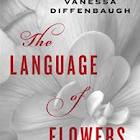
I'm starting with the last book I finished first, a recommendation from my sister Amy, The Language of Flowers by Vanessa Diffenbaugh. Keep in mind that when you go shopping for the book, you need to remember the author's name; otherwise, you might end up with a botanical handbook instead.  (Just as one of Amy's book club friends, when the group read Rules of Civility, bought George Washington's manual, rather than the novel taking its name from the same, and wondered why anyone made that choice).

I had hardly started reading the novel when I started thinking of the specific people I wanted to tell to read this book.  The book opens on what is the legal eighteenth birthday of Victoria, as her social worker comes to take her away from the group home where she has been living after a number of foster homes and failed adoptions.  Given a place to live for six weeks while looking for a job and a place to live, she instead uses the time transplanting plants, especially flowers, from all over San Francisco to the park where she will hide out and sleep once her time runs out. 

The sections of the novel told as flashback reveal the source of her obsession with "the language of flowers" and of her mistrust of others and her own self-loathing, her life with Elizabeth, a single woman who owns a family vineyard and who plans to adopt Victoria.  Diffenbaugh moves between the past and the present seamlessly, drawing the two parts of Victoria's life together when she meets a gentle flower vendor who shares her private language of flowers. Grant proves patient enough to allow Victoria to overcome her personal barriers to relationships.

Among the secondary characters Diffenbaugh creates to people her stories is Renata, the florist who sees through an inexperienced homeless girl and gives her a chance to use her gift, as well as Renata's family, who walk right past Victoria's protective wall and care about her.

I frequently do little more than skim the afterword and other material following the end of a novel, but (after midnight) I read through the alphabetized list of flower and their meanings in the appendix, and noticed the mention of the Camellia Network, "a nonprofit organization [established by Diffenbaugh] dedicated to helping youth make a successful transition from foster care to adulthood."  For personal reasons, this is a cause touching my heart. Before I start the next book on my list (or my syllabi for the new semester), I plan to learn more about this particular cause.
Share/Save/Bookmark

Friday, June 22, 2012

The Cove: New from Ron Rash

I liked Ron Rash's first novels before I had a chance to meet him, first at our state English Teachers' conference and later at our college Writers Symposium.  His self-effacing nature when he meets his audience only adds to my motivation to read his work.  Some writers may enjoy book tours and the limelight.  I suspect that many, like Rash, would prefer to be somewhere quiet writing. He is disciplined enough, according to reports, to write three hours every day.  Still, he manages to be gracious to his readers and fans, taking the time to talk about his work.  As a reader and a fan, I am more glad that he carves out that time to write.

Rash's latest novel The Cove is set in familiar territory--Western North Carolina, specifically in the town of Mars Hill, where the small church-sponsored liberal arts college of the same name is located (undoubtedly named for the Areopagus--Mars Hill--where the apostle Paul delivered his famous sermon about the unknown God).

The protagonist Laurel Shelton lives with her brother Hank in the Cove, an dark area avoided by the locals, considered haunted.  Because of her large purple birthmark, they also ostrasize Laurel, some even considering her a witch.  Only Slidell, their older long-time neighbor is willing to interact with the siblings without hesitation. 

The novel takes place during World War I in a part of the country where citizens don't always march off to war with blind patriotism.  Not far from here, the conflicts at "Blood Madison" occurred between fellow townspeople fighting on opposing sides during the Civil War.  As the story opens, some of the young men are returning from fighting, physically and emotionally scarred, including Hank, who has lost a hand. 

The darkly comic antagonist of the novel is Chauncey Feith, the son of the local banker who has enlisted but remains safe in the recruiting office, playing war games with his own troop of young local boys.  He drills them, preparing them to enlist once  they come of age, but relegates most of his battles to the safety of challenging German books in the college library and garnering opposition to the older, once-respected German professor there.  Something in his final showdown reminded me of George Orwell's "Shooting an Elephant," in which the first person narrator (presumably Orwell) takes action against his better judgment, noting that his "whole life, every white man's life in the East, was one long struggle not to be laughed at."

The catalyst for action in the plot occurs when Walter, an escapee from an internment camp ends up in the cove, apparently mute.  He possesses a talent, however, playing the flute.  In fact, when Laurel first hears him, she thinks she may be hearing one of the rare fabled Carolina parakeets. He provides a convenient suitor for Laurel, a hard worker winning the approval of her brother who plans to marry soon, but delays revealing to Laurel he must leave their cove or lose approval of the girl's father. 

In Laurel Shelton, Rash has created a vulnerable, broken young woman, defensive to a fault, eager for love, curious about the sparse clues from the stranger, stuck in an exile not of her own choosing.  She joins the roster of strong women--no two like--that people Ron Rash's novels and short stories.  Like his other works, I know too that I can recommend The Cove to some of my pickiest readers, the one who stay up until the wee hours of the morning to finish his books, then email me a note of thanks before going on to sleep.
Share/Save/Bookmark

Thursday, June 14, 2012

History with an Individual Focus

I usual explain to people that I prefer to read fiction over nonfiction, but when I look at my reading list, I have to qualify that assessment. What I find, though, is that I love a good story well told above all.

I first discovered Erik Larson's work when I read The Devil in the White City, his book that tells of the people who dreamed of the Chicago World's Fair and brought it to life.  In that book, while looking at the big picture, Larson wove a narrative thread of a doctor in town who became a serial killer, luring young women who had arrived in town, single and independent for the first time, then murdered them.

While that story was particularly disturbing, the facts and details he used to balance it, telling about the architect heading up the plans for the exposition, Buffalo Bill's performances outside the perimeter of the fair, the first Ferris Wheel, the fire--all were fascinating to me.  In fact, the year I read the book, I went to Chicago with my husband on business and while he worked, I visited the Museum of Science and Industry, the only permanent building of the World's Fair, and Graceland Cemetery, known as "the architects' cemetery" to see the graves of so many people mentioned in the book.

I went on to read Thunderstruck,  the story of Marconi and the invention of the telegraph, told alongside the story of Hawley Crippen--another true life murder mystery.

This summer, after visiting The United States Holocaust Museum in Washington, D.C., again, I began reading Larson's latest publication In the Garden of the Beasts.  There have certainly been many various accounts of Hitler's Germany, but this book focuses on the early years, beginning in 1933 when William Dodd was named U.S. Ambassador to Germany. An unlikely pick, Dodd and his family spent several unsettling years in Berlin during Hitler's rise, as America and most of Europe seemed to ignore all warning signs, intent on keeping peace--or attempting to recoup the debt of Germany owed to American investors.

In this book, Larson focuses on Dodd and on his adult daughter Martha, who traveled with her father, mother, and brother, leaving behind an estranged husband about whom she told almost no one.  She lived an exciting, sometime scandalous social life, consorting with men of all nationalities--including prominent Nazis--and falling in love with a Russian diplomat charged with recruiting her to spy for the Soviet Union. In the novel, Dodd is shown and often misunderstood and maligned. He was an academic placed amid the "Pretty Good Club"--diplomats living on inherited wealth, far above their salaries. Dodd insisted on shipping his old, plain Buick to Berlin and living as a model for American citizens suffering through the Depression. His example earned more ridicule than admiration.

Dodd seemed to open his eyes more quickly to Hitler as a threat, but his warnings were barely heeded.  Only years after he was recalled to the States--leaving reluctantly--did other recognize his insight.

Through the stories of Martha's interactions with the people of Berlin, Larson also introduced a number of American journalists--some with Jewish heritage--working in an increasingly threatening environment.

While it seems that everything that could be written about this part of the world at this particular time has been written, Larson's book manages to serve not only as a historical account, but as a warning to readers to pay attention to the world scene, not discounting aspiring leaders with ridiculous agendas.  Hitler, while seeming cartoonish and laughable, certainly inspired much more than mockery.
Share/Save/Bookmark

Monday, June 11, 2012

Dining with Robert Redford: Reading with Tamra Wilson

Most of the time when I read short stories, I am selecting them from an anthology featuring different writers.  Occasionally, I have the luxury of reading several by a particular author.  In fact, in the fiction unit of the literature course I teach, I sometimes have my students read several stories by one author in order to discover common elements of style.  Our text usually includes several by one of my favorites, Flannery O'Connor, as well as Hawthorne or Faulkner.  When author Ron Rash appeared at our Writers Symposium a couple of years ago, in addition to teaching his novel Serena, I also used some of the short stories from his collection Burning Bright, which particularly struck a chord with our students.


The short stories in Tamra Wilson's first collection Dining with Robert Redford, many of which have been published in a variety of journals come from the perspective of a variety of women, mostly working class Southern women.  Wilson is a native of Illinois, but having lived in the South for years now, she brings the stories to live with colorful details, recognizable settings, and authentic voices.  Hers are not necessarily happy women; they often seem to have an edge of dissatisfaction and disappointment, borne out in their attitudes toward the people with whom they live and work.

While Wilson's protagonists often come across as judgmental--displaying thinly veiled jealousy, sanctimoniously dining on gossip, comparing themselves--almost invariably favorably--with the neighbors, they resemble in spirit Flannery O'Connor's Mrs. Turpin of "Revelation" or Mrs. Hopewell in "Good Country People."  Readers may feel critical of them only up to the point of recognizing ourselves and our own flaws.

One thread that runs through the collection is the fine line between settling and accepting one's circumstances and limitations. Readers are forced to question the current educational environment, forcing young people toward paths before they've had time to develop their own interests or to live up to their parents' dreams of uber achievement. Wilson's characters also deal with consequences of early choices and actions, forcing them into dead end jobs or doomed marriages.

While the underlying themes are serious, Wilson constructs her stories and her characters with humor and sympathy.  The conflicts aren't life and death; they are simply real life.  Readers will find themselves comfortable pulling up a chair in the kitchen or pulling up a chair at the quilting bee right alongside these folks--or peeking out their windows to see what the neighbors are up to now.

Tamra Wilson demonstrates that the richness of story doesn't come as a Southern birthright but as a result of simply paying close attention in a small-town life.
Share/Save/Bookmark