Showing posts with label audiobooks. Show all posts

Sunday, January 4, 2026

What "Counts" as Reading?


 I love how passionate readers are about their own opinions as to what counts as reading. I missed the recent guest editorial by Brian Bannon in the New York Times Book Review entitled "Do Audiobooks Count as Reading?" However, I did catch the passionate letters written in response that were published the next week.

People get worked up about the topic, as well as whether physical books are superior to ebooks. I'll start by suggesting that it's okay to make that judgment for oneself but not for others. In my earliest years of teaching, I remember suggesting that a student with reading problems try listening as he read. He had better comprehension and retention than many of my students who had no learning disabilities. 

When my husband moved from Alabama to North Carolina in September while I stayed behind to let my children finish out the school year, I relied on books on tape for the long eight-hour drives on weekends when I visited him. I went from Cracker Barrel to Cracker Barrel where I could buy an audiobook, then turn it back in for a prorated refund based on how long I had it. I graduated to books on CD and then discovered the Libby app that gives me access through the public library (supplemented by Audiobooks.com and the Chirp app). 

I also had one of the earliest eBooks--the Sony version that predated Kindle and Nook--then went on to read on my iPad or my phone.

Yet I continue to buy books and to check out physical copies. I keep several going at once. 

I knew that the eBook experience was comparable--for me--when I would catch myself licking my finger to turn the page. And to answer one complaint about electronic books: Yes, I generally read with a very sharp pencil tucked behind my ear, so I can underlining favorite phrases or make notes in the back. I had to adapt with eBooks and audiobooks.

Last spring, my granddaughter rode with me to the beach as I listened to Abraham Verghese's Covenant of Water. At one point, one of the characters said something particularly poignant. Avery paused the audiobook, took my phone, and typed the quote into my phone notes page where I keep just such quotes. She knew I would want her to capture that one before I even asked. 

Sometimes an audiobook will be so moving that I buy a physical copy to keep, just so I can go back to favorite parts--or read again. But as I compile my list of books read at the end of each year, I include them all because, I have discovered, I can't always remember if I read or listened to a particular title. Since I already subvocalize (a habit speed reading coaches discourage), I already hear all the voices even when I read words on a page. 

Audiobooks make traveling alone more of a pleasure. I can often remember right where I was when I heard a particular passage of a book. (When I was listening to Familiaris in a Wal-Mart parking lot in Lenoir, NC, I remember a particular wave of grief I shared with the protagonist. )

I think of the Israelites in the Old Testament, standing as listening as the sacred texts were read to them. I think of books for the blind. I remember Mrs. Knott reading aloud every one of Laura Ingalls Wilder's Little House series.  You can decide for yourself what counts, but those counted for me.


Share/Save/Bookmark

Monday, April 29, 2024

Three Books Suggestions for Three Different Kinds of Readers.

Nothing pleases me more than the chance to talk books with fellow bibliophiles. I realize, though, that when someone asks for reading suggestions, my answers are never one-size-fits-all. I read--and enjoy--such a variety of books, but what might suit one reader wouldn't suit another. That is part of the underlying message of Erica Bauermeister's novel No Two Persons.  The title refers to the saying, "No two persons read the same book." The book is called a novel, but could also be considered a series of interlocking short stories. 

The book opens with Alice Weir, the aspiring writing whose story finds her, in the character of Theo. Readers meet Lara, the young mother working through the slush pile, looking for the book that will establish her credibility--and it is Theo. Readers also meet the actor who turns to narrating audiobooks after a skin condition ends his career. The book publisher, a diver, an artist, and a high school student trying to keep her homelessness secret until she can graduate high school. Bauermeister creates a unified, satisfying whole. 

I was slow coming to Verghese's The Covenant of Water, even though I remember loving Cutting for Stone. I will admit that the length of the book led me to slide it down the stack--until I decided to take along the audiobook on a beach trip. This was. one of those books I wanted to recommend to other people before I even finished it. Spanning the first three quarters of the twentieth century, this story starts with the arranged married of a fourteen-year-old girl to a widower in his forties who needs a mother for his son.

While that scenario on its own could have gone so wrong, the marriage becomes a real one

The story is set in a village in India that is part of the community known as St. Thomas Christians, tracing their lineage to one of the twelve apostles believed to have made his way to the country. The narrative had me moving swiftly from laughing to weeping in short order. I also had to keep a pen and paper nearby to jot down some of the beautiful lines.

Verghese introduces interesting characters, including Digby Kilgour, a Scottish doctor who moves to India to practice medicine. The leper colony where he eventually lands is a rich part of the narrative. The title refers to a condition in the main family of the story. The young bride quickly recognizes her husband's unnatural avoidance of water, learning that "the condition" has been present in the family for generations. 

These characters face loss, betrayal, disease, accidents, and disappointments, but the story is one of redemption nonetheless. It was worth the more than thirty hours of listening.


 James Goodhand's novel The Day Tripper, set in London, uses a similar plot device to Margarita Montimore's Oona Out of Order, which I read a year or so ago. The protagonist in this story Alex Dean is about to beat the odds, with acceptance to Cambridge offering escape from his life of poverty, never able to live up to his father's expectations. He has met a girl--a medical student--who seems the perfect match, when an encounter with an antagonist from his past leads to a fight--and he wakes up not only in another place, but another time. 

The pattern continues, with him waking each day in a different time and location. Sometimes he is at rock bottom; sometimes he has glimpses of hope. Every day he has to learn quickly from context. Then he meets a man--a high school teacher--who has some inkling of his situation. 

What begins as a frustrating tale turns into story of the fragile balance between fate and free will. Alex finds that he not only can but must pull against the weight of history. The dramatic irony is both nerve-wracking and great fun. I dare say the book is about hope.


Share/Save/Bookmark

Friday, September 10, 2021

Best of the Fiction Stack


A look back at my list of most recent books assures me that I've managed to keep a steady diet of good reading, even when I have more to read than ever for school. I have always enjoyed a book that gives a glimpse into the lives and work of great artists. Nothing enables time travel like a good book either. Laura Morelli's novel The Night Portrait follows multiple perspectives in two time periods: Much of the story takes place in Milan, Italy, during the 13th century, following Leonardo da Vinci and one of his few portrait subjects Cecilia Gallerani, captured by the master in "Lady with the Ermine"; the other storyline takes place during WWII, following Edith Becker, a German art conservator pressed into serve by Hitler's regime to locate works of art owned by wealthy Jewish families to add to the German collection, and Italian-American soldier Dominic Bonelli, assigned to guard the Monuments Men, who were working to protect art and architecture and locate stolen works.

I read the book Monuments Men before the movie was released and was particularly fascinated to learn that one of the real Monuments Men, Robert Posey of south Alabama, shares ancestors (named in the book) with my husband's family. 

Morelli weaves the story lines together smoothly. Edith feels guilty for her unwitting role in stealing art from private owners, particularly when she discovers that many pieces end up not in German museums but in the private collections of high-ranking Nazi officers. She decides to take the risk of keeping records of works taken, their owners, and their place of "safekeeping." Bonelli has a natural artistic talent, but questions putting soldiers in harm's way to safeguard art, not lives. His desire to return home to his wife and daughters, one he has yet to meet, exists in  tension with his realization of the importance of art to human beings.

Leonardo, caught in the intrigue of a palace where he is painting the mistress at the time the Duke weds, comes across as an interesting, multi-dimensional character. Cecelia's story is a variation of the that of many women whose future is decided by others, often fathers and older brothers. 

Another novel that kept me reading recently is Catherine Lowell's novel The Madwoman Upstairs. The protagonist Samantha Whipple is a young woman in her early 20s, the last living relative of the Brontes. Raised and educated by her father in Boston after her parents' divorce, she arrives at Oxford, where she is placed in a dorm room in the "Tower" in a part of the old school that is a regular stop on campus tours 

Having lost her father prematurely in a fire, she seems to be looking for the part of him left behind. While the world speculates about her supposed inheritance, Sam is baffled as one by one, his father's personal copies of the Bronte sisters' novels appear in her room.To complicate matters, Dr. James Orville, her tutor (or don) challenges her every idea about literature, while avoiding the Brontes as long as he can.

Though I haven't Googled for confirmation of my theory, as I read the novel, I realized that Lowell must have engaged in academic research on the Brontes. The novel has material that could, instead, have been a dissertation. Samantha's conversations during tutoring session with Orvilles, as well as in her interior monologue, explore a variety of interpretations of literature, the Bronte works in particular. She and Orville argue about reliability of narrators, the meaning of text, and the value (or lack of value) in reader response theory. All of the literary talk is supported by direct textual evidence, making me think of re-reading Jane Eyre and Wuthering Heights, and picking up The Tenant of Wildfell Hall. 

Sam, the novel's protagonist is socially awkward, certainly missing opportunities to make new friends at Oxford in favor of following her own muse and trying to discover what her father wanted to tell her. Lowell incorporates some plot turns that require a willing suspension of disbelief. The romantic story line is less plausible. Teaching in a college environment myself, the teacher-student complications set me on edge a bit. Sometimes Samantha isn't even very likable--but she is curious, courageous, and willing to try different perspectives. I learned a few things about the Brontes and their works as well that 'd much rather have learned reading a novel than a dissertation.

I got the suggestion to read Pickard County Atlas by Chris Harding Thornton from a former colleague who regular pops up in my messages with great book selections. I had trouble finding it at first because autocorrect had changed the title to Pickle County. The novel's main character Harley Jensen is a deputy sheriff in a small town in the Nebraska Sandhills still haunted by his mother's suicide. The story opens just as the patriarch of the Reddicks, a local family, decides to go ahead and have a funeral--without a body--for his son who disappeared years before, a crime Jensen's department has been unable to solve. 

Thornton also follows one of the Reddick sons, something of a reprobate who knows hot to get Harley's goat, and the other Reddick son's wife Pam, a young mother completely restless in her role as wife and mother. The unsolved murder and the disappearance of the elder Mrs. Reddick, long unbalanced, keep the tension and suspense throughout the story. The author deftly creates such a strong sense of place. Pickard County Atlas is a dark tale, but one that gets under the reader's skin. 


Share/Save/Bookmark

Sunday, December 13, 2020

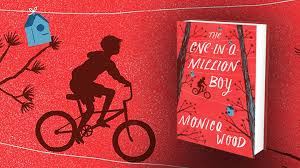
The One-in-a-Million Boy by Monica Wood


As I reviewed favorite books I've read this year, I was surprised to realize that I hadn't shared one of my favorites, The One-in-a-Million Boy by Monica Wood. I can't remember who had recommended the book to me, but I had filed it away in the back of my mind until it popped back up on my radar--and I'm so glad it did.

One of my favorite assignments with my college freshmen is three interviews, ideally with their oldest living relative or someone of that generation. I am always so gratified when I find how much the assignment meant to many of my students. Some who didn't know their grandparents well ("I just thought of him as that grumpy old man at our house during holidays.") who discovered someone with common interests and experiences, with special stories worth preserving.

The book opens with an 11-year-old boy who has been assigned as part of the troop activity to do chores for Ona Vitkus, a 104-year-old Lithuanian immigrant. The boy has his tape recorder with him for these Saturday visits as he interviews her for a fifth-grade project. She has much to tell from a rich, full life.

The boy is unusual in some ways, but particularly in his fascination with the Guinness Book of Records. Once he realizes Ona's age, he becomes obsessed with helping her to break a world's record.

Spoiler alert: The reader learns early in the story that something has happened and the boy is no longer living. His father Quinn reports to finish his son's responsibilities. He has been an absentee father since he and the boy's mother Belle divorced, so he carried a load of guilt. 

Moving back and forth between the Saturdays with the boy interviewing Ona Vitkus and the days his father begins showing up, Wood brings all of the characters to three-dimensional life, flaws and virtues, in this painfully beautiful, haunting story.


Share/Save/Bookmark

Wednesday, December 2, 2020

Carol Burnett: In Such Good Company


 One of my favorite audiobook sources recently offered Carol Burnett's memoir of her years on television In Such Good Company. Last year when she appeared at the Ryman Auditorium, my sister and I took our mom for the show and loved it. Tim Conway had just died, so she had such a loving tribute to him as a colleague and friend.

This whole book, read by the author, is written in that same generosity of spirit. To prepare for writing the book, Burnett says she re-watched ever single episode of the show, which ran from 1967 to 1978. In her remembrances, she offered personal stories and inside views of the regulars on the show: Vicki Lawrence, Harvey Korman, Tim Conway, and Lyle Waggoner, as well as the people behind the scenes. 

I especially loved the stories about Bob Mackie, having gotten to know him when he spent a couple of years with a furniture collection with Clayton Marcus. During the entire run of the show, Mackie was responsible for about 60 costumes every week. Burnett said sometimes she didn't know how she was going to play a character until she saw how Bob dressed her. He is also credited with the iconic Scarlett O'Hara scene where Burnett literally wore the curtains--rod and all.

When the show ran, they had a dress rehearsal and two live shows every week. She says the first live show was run exactly on script. Once that one was a wrap, the actors had the freedom to engage in the ad libs for which the show was best known.

In her stories of the regulars and the guests, Carol Burnett is always positive and complimentary. She left out names in the very few negative details.  For someone who rubbed elbows with all of Hollywood's stars, she has remained remarkably humble, her integrity intact. 

This book will likely have readers searching the internet for tapes of the show. Burnett points out that when they were first released for syndication, they were cut to 30 minutes, eliminating the often elaborate dance sequences. Now the internet has made the full-length shows available for watching again--and again and again. The humor holds up.


Share/Save/Bookmark

Tuesday, February 25, 2020

Joshilyn Jackson's Southern Voice: Almost Sisters

After painfully making my way through a couple of audiobooks set in the South but read by decidedly unSouthern narrators, what a breath of fresh air to listen to Joshilyn Jackson reading her own novel The Almost Sisters. I've been reading her books since Gods in Alabama, and she always weaves a great story line with quirky but believable characters.

This novel opens with Leia Birch Briggs, a comic book artist and self-proclaimed nerd, discovering that a one-night stand with a man dressed as Batman (or is it The Batman to purists?) at a comic book convention has left her pregnant with a child she decides she will raise on her own.

She delays telling her family, however, finally deciding she'll first tell her beloved grandmother Birchie, who still lives in the small Southern town of her family origin. She gets the news that her grandmother has been keeping a secret, with the help of her best friend Wattie, the daughter of the family's former black maid: she has a form of dementia known as Lewy bodies. (Yes, it's a real illness.) The dementia revealed itself at a church social when Wattie wasn't able to keep Birchie from spilling town secrets, particularly the extramarital shenanigans going on in the choir room.

Meanwhile, Leia learns that her half-sister--always the perfect one--is in the middle of a marital crisis, and Rachel's young teenage daughter witnessed the blow-up. To get her out of the middle of the crisis, Leia takes her along to Birchville.

As she tries to make the hard decisions about moving her grandmother to a safer place, Leia discovers that the secrets Birchie let fly at the Baptist Church were nothing compared to her own secrets she's been keeping--or hiding--in the family home.

Jackson uses the experiences of many of the characters to explore the impact of a father's absence--either by choice, loss, or pure ignorance. Leia's father died when she was too young to remember him; her stepfather was a loving parent, but early on, Rachel prevented Leia from calling him Dad. Rachel's teen daughter connects with two local teen boys whose mother's infidelity was exposed, and Birchie's father issues emerge through the course of the story, as Leia has to make decisions about how much--or if--to tell Batman she is carrying his baby.

Jackson builds a story that is at once a romance, a coming-of-age story, a family saga, and a comedy. No, she doesn't relegate Batman to his early cameo appearance as the story opens--and he is anything but the stereotype readers might expect--unless they know Joshilyn Jackson's fiction, that is. While I know the story would read just as authentically Southern off the pages of the book, hearing it narrated by the author is an audio treat.
Share/Save/Bookmark

Monday, May 28, 2018

Rick Bragg and Lee Smith: Southern Journeys.

Rick Bragg's  recent appearance at Nashville Public Library to discuss his newest book The Best Cook in the World prompted me to load his older book My Southern Journey  in my CD player for a weekend road trip. I can't keep my own copies of Ava's Man and All Over but the Shoutin' because I keep sharing them with anyone asking for book suggestions. Even people who aren't familiar with his books know him for the last page of each issue of Southern Living. This book is a collection of his essays that have appeared in this and other publications.

Bragg comes across as a what you see is what you get kind of Southern man--opinionated and direct. Much of his humor is at his own expense, but he also manages to balance the humor with genuine sentiment. In this book, he touches on all the areas of life, especially Southern life--food, dogs, family, and football.

As an Alabama native myself, listening to Bragg's stories kept ringing all the bells and pushing all my buttons. His opinions on food and how it should and should not be served paralleled my own. His memories of Paul "Bear" Bryant (so good they named an animal after him") were so genuine and tender, I almost had to pull the car to the side of the road. Yep. Roll Tide. But rather than simply parroting the same tired old cheers, he also discussed some pivotal changes in race relations in SEC football.

When Bragg talked about the 2010 tornadoes that tore through Tuscaloosa, I recalled not just the news coverage, but the visual details provided by my niece and nephew, students at the time who were touched by the damage and by the human toll. Bragg recalled how people came together for the recovery; I remembered my nephew Jeff and his friends whose graduation was cancelled but who remained behind, helping to search for bodies and survivors, preparing and delivering food to residents and rescue and clean-up workers. They too saw not only the horror of a natural disaster but the dignity and compassion in the wake.

Without intentionally planting myself in the literary South, I next picked up Lee Smith's novel The Last Girls, which has been sitting on my shelf for awhile. I never know what prompts me to read a particular book at any given time, but I'm often surprised by the parallels. This book follows two journeys made by friends at a Southern women's college, one on a raft down the Mississippi River during their college years, another years later on a riverboat following the same path.

One of the key characters Harriet Holding is a teacher who now works with adults. She has never married, but her recollections of her own unusual childhood help to explain her resistance to intimacy. Courtney Hurt is successfully but unhappily married. On this trip she is torn between loyalty to her husband, now showing some signs of early dementia, and her lover who is pushing for commitment. Anna Todd, a successful romance novelist, uses the trip to write the next in her series of  novels, each set in a different Southern state. She romanticizes the young man who handles her luggage and straightens her room, inserting him into the novel, but she is slower to reveal her own back story to readers, one she never reveals to her old school friends. Catherine Wilson is the only member of the group bringing her husband along on this reunion trip. After escaping two unhappy marriages, she's now feeling uncertain about this one. These two live in Tuscaloosa. Smith gives the husband a chance to tell his side of the story, including their Tuscaloosa tornado experience, allowing readers a chance to hope for a happy ending.

The character absent only in a physical sense from the story is "Baby" Ballou. The one of the college friends who lived dangerously, she had ironically been paired as a roommate with Harriet, forging an unlikely sisterhood and giving Harriet the chance to live vicariously through Baby. Now the "girls" are charged with leaving some of Baby's ashes in the Mississippi River before they reach New Orleans at their journey's end.

Smith's title comes from the realization that these were the last females called "girls" with impunity. Nowadays, they note, they'd be called young women. They recognize they are living on a cusp. The novel leaves them without carefully tied up stories. Instead, readers are able to imagine what might come next for women who have a lot of living left to do.
Share/Save/Bookmark

Wednesday, March 21, 2018

Francesca Hornak's Seven Days of Us

As I've often admitted, I am not a reading purist: I love to read a "real book" with the heft of the volume in my hand, but I'm just as content to read an electronic book. I also take exception to those who don't think audiobooks count as reading.

I freely remind them of the children of Israel who only knew the Word from listening as it was read aloud. Who am I to discount that experience?

Honestly, I can't go for long without a book on CD loaded in the car, and the only way I can remember if I read or listened to a book is that I can sometimes recall the excellence of the reader.

To fuel my fix, I'm often scanning the local library shelves, starting with new arrivals and then scanning the shelves for something I might have overlooked. I also make regular use of the hold option, drawing from the whole local library system.

Recently, while I was waiting on a couple of requests, I ran across Francesca Hornak's novel Seven Days of Us. The back cover description caught my eye, and I decided to give it a try, even though I had not heard anything about the book.

The novel, set in England during Christmas follows several members of the Birch family, forced to spend the week of the holiday in quarantine when their daughter Olivia returns from Liberia, where she was one of a group of doctors providing humanitarian aid during an outbreak of the deadly, highly contagious hog virus. Olivia soon learns that Sean, her Irish colleague with whom she's formed a relationship--against protocol--has come down with the virus. She's unable to reveal her concern to anyone since their relationship broke no-touch regulations, meant to safeguard them and those with which they came in contact.

Meanwhile, the younger Birch daughter Phoebe, her father's favorite, has just become engaged, plunging her into wedding planning frenzy. To add to the tension, their father Andrew learns that he fathered a son Jesse years ago, when he and Emma were first dating. Although Andrew has achieved a certain level of fame as a snarky food critic, he formerly served as a war correspondent, where he and Jesse's birth mother enjoyed a brief tryst.

Hornak manages to balance the humorous and serious over the course of the seven days the Birches spend together in the old country home that once belonged to Emma's family. As they are joined first by Phoebe's fiance' and then Jesse, readers soon learn that each of the characters is harboring secrets. No single character appears particularly villainous: each has noble points and flaws, making them both sympathetic and believable characters. The shifting dynamics of the family during their imposed quarantine keep readers engaged, sometimes squirming with them, sometimes cheering or laughing aloud, and sometimes grieving.

In whatever format one chooses, the novel provides at least a good seven days of reading entertainment.


Share/Save/Bookmark

Monday, September 4, 2017

In Rilke's Footsteps: Colum McCann's Letters to a Young Writer

I had the pleasure this summer of working with a group of teenagers to help them start a writing group. Their writing goals and genres were varied but they shared the desire to write and they exhibited such mutual respect for one another. Now that they're back in school, I realize that some English, journalism, and creative writing teachers are going to feel so fortunate to have their spark in the classroom.

This week I listened to Colum McCann's Letters to a Young Writer, a title he borrowed from Rilke . I'm a great fan of McCann's novels, Transatlantic and Let the Great World Spin, so I trusted that he would have something valuable to say. I was right. I also appreciated that he acknowledged that his "young writer" might, indeed, be any age.

Since McCann read the audiobook himself, I got to enjoy his lovely lilt, but I hadn't made it far through the CDs before I realized that I probably need a copy for my own library shelves. Each chapter begins with a quotation from a great writer--living or dead. I wanted to write them down and stick them to my mirror or over my desk (if I had one) or on the dash of my car.

The advice is practical enough that an individual writer or a  writing group could spend time working chapter by chapter. McCann doesn't claim to have all the answers, but he dispenses wisdom in a straight-forward, sometimes self-deprecating way. He acknowledges that no one can TEACH you to write.

He kept the book short, too, letting readers get back to the role of writers, following his strongest bit of advice: get your arse in the chair.
Share/Save/Bookmark

Friday, December 11, 2015

Curious Incident Meets Neverwhere: David Mitchell's Slade House

No one can accuse David Mitchell of writing the same thing over and over. After reading The Thousand Autumns of Jacob DeZoet  and then Cloud Atlas, I couldn't imagine how one writer could accomplish two such distinct but intricate novels.

When I started Slade House, with the introduction of the first character, I felt as if I were back in the world of The Curious Incident of the Dog at Night-Time by Mark Haddon, particularly since the first protagonist (or victim) introduced was a young boy obviously somewhere on the Asberger's spectrum. Then -- just like that, the book shifted to another character, and another. Suddenly, I felt like I was reading something by Neil Gaiman--Neverwhere or Anansi Boys.

Whoever this David Mitchell might be, he had me hooked in this fantasy tale of events that occur at Slade House every nine years as twin brother and sister Nora and Jonah bend reality and lure in individuals to prolong their lives.

Of the visitors to the unusual estate which improbably takes up huge space, though literally appearing between two city blocks, some are amusing, some annoying, and some quite sympathetic. Of them all, Sally Timms, visiting the house on Halloween night with her Paranormal Club from University, is the most sympathetic. I kept wanting to scream warnings.

And since the world created within the walls of Slade House doesn't play by the rules, the characters who find themselves there certainly have the odds against them.

Once I finished the book, I did a little reading about the other book by Mitchell I haven't read yet, The Bone Clocks, and I discover there are connections between the two works, particularly the 2015 visitor Marinus, a "horologist." Suddenly, I remembered running across the phrase "bone clocks" in the tale. In fact, the grandfather clock earned mention in each section of the tale.

Now I wonder if Mitchell will stay in this world awhile or if he's ready to move on to a completely different time and place.
Share/Save/Bookmark

Tuesday, October 20, 2015

Bill Clegg: Did You Ever Have a Family?

I maintain a keychain full of library cards, granting me borrowing privileges at every institution to which I have legal access. As I frequently remind my students, though, the most valuable resource in any media center--as libraries are now called--is the personnel. I have a fondness beyond words for that special class of librarians who see their mission as that of matchmaker, bringing together books and their best readers.

Even though I regularly frequent larger libraries in the area, I return again and again to the small Granite Falls Branch Library of the Caldwell County system.  Years ago, I discovered their audiobook collections, and I have since maintained a relationship with the staff there. They not only listen to my recommendations, but they order them.  Best of all, when I'm there returning or checking out, they frequently tell me a title they not only recommend but will place on hold for me.  Most recently, I discovered Bill Clegg's novel Did You Ever Have a Family? just this way.

The novel, told from a number of perspectives opens as a teenage boy smokes pot in his upstairs bedroom becomes aware of an uproar downstairs because of a nearby house fire.  Gradually, the story unfolds of a family, broken in the clearest sense of the word but coming together for a daughter's wedding--until most of the key members of the wedding party die in the fire--all the inhabitants of the house but the bride's mother June.

This is a story of the survivors--two mothers from vastly different situations handling their grief, loss, and guilt in the only way they know how--alone. June, who has lost her young boyfriend Luke in the fire as well, leaves town. Luke's mother Lydia, an outcast in the Connecticut town for years, deals with the loss and the accusatory whispers in her own private way.

Pulling their stories together, though, Clegg introduces secondary and minor characters who have moved in and out of their lives. Readers are introduced to the family of the groom, a pair of women running a small hotel in Washington state and the woman who cleans the rooms, the natural father of one of the deceased, who never knew of the son's existence, and even the caterer and florist who were never even paid for their services.

The question in the title is posed as an answer or explanation by one of the survivors, an attempt at one time to explain her unsettled life. For anyone who can answer yes--and that's all of us--the story Clegg spins, moving back and forth between Connecticut and Washington, shows the possibility of moving past guilt and loss, even with scars and hurt intact.

This is just the kind of book to pass along to any reader who wrestles with the mingled joys and sorrows that come with loving a family. And that's all of us too.
Share/Save/Bookmark

Thursday, August 20, 2015

Another Look Back at WWII

I don't intentionally seek out books set during WWII, and sometimes I catch myself wondering if there's anything new to add to the body of fiction set during that time period. Then I pick up another book, and sure enough, I learn something new.

Kristin Hannah's novel The Nightingale that is getting lots of attention right now gave me insight into an aspect of the war I find particularly interesting. When I read All the Light We Cannot See, also set in France, I recalled my own visit to Paris and especially to Normandy, where the main characters move in that tale. Of all my travels, few compare to meeting American veterans of that war visiting St. Mere Eglise on the anniversary of D-Day in 2005.

Hannah's novel takes a hard look at day-to-day life in France after the French government surrendered and Nazi Germany took over.  The story moves back and forth between the lives of two sisters--Isabel Rosignol, young and impetuous, and her sister Vianne Mauriac, a mother and teacher just trying to get by. Isabel, unwilling to stay in her sister's home and behave in a way that would avoid danger once a Nazi officer is billeted in the house, returns to Paris and begins working with the underground, helping downed Allied pilots to escape.

Meanwhile, Vianne must care for her daughter Sophie in difficult conditions while her husband is away in a German prison camp. Not until she sees the threat toward her Jewish friends does she begin her own resistance, taking in Jewish children whose parents are deported, obtaining false identification papers and bringing them to the local Catholic orphanage.

The story is not without narrative flaws.  Many of the situations--the way the characters behave, the many coincidences in the story--can be distracting to an observant reader. Even the frame story set in modern day, as one of the sisters suddenly decides to travel for a reunion in Paris--scheduled for the next day--is a little much to believe. To enjoy the book, though, I just channeled my "willing suspension of disbelief," and let myself learn a little more about the war--and care a lot about those who resisted, the victims and the survivors.
Share/Save/Bookmark

Tuesday, July 14, 2015

The Love Song of Miss Queenie Hennessy: A Lovely Surprise

I admit I am fickle. My to-do lists don't always work because I keep changing them. My to-read list is even worse.  No matter what book I think I'll read next, some other volume jumps the line. Of course, with my audiobook selections, the finds are often serendipitous, as was the case with Rachel Joyce's new novel, The Love Song of Miss Queenie Hennessy.

I had read her earlier novel The Unlikely Pilgrimage of Harold Fry at the recommendation of one of my once-a-year reader friends I know through the National Council of Teachers of English convention sessions--Readers Ourselves. The novel followed the journey of a man, recently retired, as he decides almost by default to walk to the north of England to see once more Queenie Hennessy after he receives a letter from her to let him know she is in hospice and wishes to thank him for his long-ago friendship. It was a charming, wonderful story that stuck in my head.

I had no idea Joyce had written another novel until I saw it on the shelf. I think she was almost as surprised to start writing it.  In this story (a pattern I'm recognizing in lots of my reading lately), she tells the story from the point of view of Queenie. Most of the story is set in the Catholic hospice where she is living out her final days. When she receives a card from Harold--whom she hasn't seen in many years--telling her he is coming to see her and advising her to wait, the message has an effect on all of the patients and caregivers at the facility.

In preparation for Harold's arrival, Queenie begins writing a long letter of confession, with the help of one of the nuns and her portable typewriter.  Through the letters, readers learn about Queenie's life, particularly at the time of many of the events Harold recalled in the earlier book.  While the book would certainly stand alone, I strongly advice anyone to read the other book first.  Since I had read it at least a couple of years ago, this book felt like revisiting an old friend, having  my memory pleasantly jogged along the way.

The best surprise in reading the novel is that the most pleasant passages occur in the hospice facility. Joyce's characters are colorful and so well-drawn. The patients and the nuns who work there are quirky, sometimes curmudgeonly, yet lovable.  As one of the women reminds the others: I may be dying but I'm not dead yet. Maybe that's the take-away from the book: there's such a beauty in the way the characters learn to make the most of the time they do have.

Reading the book--these books--makes me want to take my own pilgrimage to some of the more out-of-the-way places in England too.  Maybe I'd even find Queenie's sea garden.
Share/Save/Bookmark

Friday, July 3, 2015

Nick Hornby Provides a Laughter and Light Reading

I'd love to have someone do a psychological analysis based solely on my reading list. I appreciated an observation by Dylan Thomas about his own habits: "I read indiscriminately and with my eyes hanging out."

I admit that I do discriminate sometimes, simply because I have so many choices. If I start a book and can tell right away it doesn't fit the bill, I will abandon it. Life's too short, and my book stack is too high.  In fact, the mere process of picking what to read next fills me with anxiety. Anything I choose means something else I postpone.

One of the perks, then, of audiobooks is that they are not in direct competition with the books on my shelves. While I could read while driving (and I'll confess that I have in the past), it's inadvisable.  As a result, my selection is narrowed to what I can find on the library shelves. Even though I work through the stacks of four different libraries, I'm less likely to go and find a specific book I was looking for than to discover something I just might want to read.

Funny Girl, Nick Hornby's latest, was just such a discovery. I had read (or listened to--honestly can't remember) Juliet Naked. I also have a couple of other novels of his on my shelves. This one, set in the sixties, follows a young woman, Barbara from Blackpool, a town in Northern England, who gives up her "Miss Blackpool" tiara within minutes of being selected, realizing she has little interest in going to ribbon cuttings at strip malls or making appearances at senior living facilities. She wants to be a comedian.

She goes instead to London, where she ends up working at the cosmetics counter of a department store--just as she had back home. Following a roommate's advice, she tries to meet men who might help her gain an advantage. While the plan doesn't work out quite right, by chance she does meet Brian, the man who opens doors for her--just not the ones he intended. A self-proclaimed "happily married man"--His wife is with him when he meets Barbara--he expects to "spray her gold and put her in a bikini." Instead, she goes to an interview for a 30-minute BBC show and lands the part of her life.

Hornby pulls together such a fun, quirky cast--Billy and Tony, the two script writers who met in jail; Clive, the actor who plays opposite Barbara but who gets second billing (in brackets in the title; and Dennis, the show's director who keeps his adoration of Barbara--with her new name Sophie Straw--quietly in check.

Funny Girl won't end up on high school summer reading or AP Lit recommendation lists, but it's great for a summer read.  Even better, it's perfect for a long drive, just enough time to fall in love with   a funny girl whose dreams come true.
Share/Save/Bookmark

Tuesday, June 16, 2015

On the Edge of My (Car) Seat: Disclaimer

I can't resist book review in newspapers and magazines. I always pick up the little book news at the library or book stores too.  I especially love the IndieBound publication for its book suggestions. I've heard so many authors, especially those experiencing early success, crediting the promotion by independent book stores for their success.

Consequently, I end up with more books on my "to read" list than I could ever read. But a new one always finds a way to muscle its way to the top of the stack. This past week, I had just noticed a mention of Renee Knight's novel Disclaimer, and I read no more than the first paragraph. When I found the audiobook on my library's new books shelf, I couldn't resist.

Knight's story unfolds in a way that reminded me of Stephen King.  She alternates between the perspective of Catherine Ravenscroft told in third person as she begins reading a book she finds on her nightstand and discovers a story she thought no one alive knew but her. She's spent twenty years protecting a secret from her husband and their son, feeling as if she's living a lie.

The alternative chapters are told in first person by Stephen Brigstocke, an elderly man responsible for the book's publication, although the story was original written by his late wife. Knight moves smoothly between the two threads of the narrative, holding back crucial elements of the actual true story that occurred twenty years before, changing all their lives. What she doesn't tell is as engaging as what she--or her narrators--reveal.

The development of the secondary characters, especially Catherine's husband Robert and their adult son Nicholas, make up a significant portion of the suspense of the novel.

While the novel doesn't make the huge shifts in awareness that a book like Gone Girl does, Knight controls her narrative deftly and develops her characters subtly and fully. The most despicable characters at time evoke readers' empathy, and the most sympathetic characters provoke questions and doubt. I found that I carried around a sense of uneasiness during much of the time I was listening to the book.

Disclaimer, though a little raw for some readers, is the perfect summer read, more likely to become a movie than ever to find a place on a summer reading list. I expect to hear a lot about the book before the summer ends.
Share/Save/Bookmark

Wednesday, May 6, 2015

The Story of a Marriage--Beautifully Told


I've remarked at times that sometimes I will read an article in the New Yorker about a subject that would not normally interest me simply because the writing is good.  After reading a few books and listening to a few audiobooks that were just prosaic, I recognize what I like in a book when I finally find it.  I picked up Andrew Sean Greer's novel The Story of a Marriage when I couldn't find anything else I knew I wanted to read on the audiobook shelf at the library. The cover wasn't even appealing, and I had expectations, never having heard of the book before.

What I found was good writing, good story-telling. Told by Pearlie Cook, the story begins in 1953 in San Francisco, where she lives with her husband Holland, their boy Sonny, and Lyle, their bark less dog. Although the narrator tells the reader at the beginning that her husband has died, since most of the story is revealed through flashbacks, it's easy to ignore that significant bit of knowledge and to get lost in the tale.

Much of the charm of the story is the way Pearlie reveals just enough, never too much information at a time. As a result, sometimes she surprises. Sometimes, she repeats a powerful passage, familiar enough to work like an echo in the reader's memory.  

Born in Kentucky, Pearlie fell for Holland twice--first at childhood sweethearts in Kentucky and a second time when fate arranges a chance meeting in San Francisco after the war.  The characters--even the minor ones--are beautifully drawn. Most interesting to me was the way the author makes Buzz Groomer, the antagonist, human and sympathetic.

Greer also manages to paint a historical background, taking the characters through the Korean War, the Rosenberg trial and execution, desegregation and civil rights, and Vietnam war. These details add richness to the story without ever getting in the way of what is, after all, simply the story of a marriage.  

I've read reviews filled with spoilers--and yes, even in this subtle story, there are some surprises.  Instead, I'd rather let the readers encounter revelations as I did.  Most of all, though, I encourage readers to slow down and pay attention to the author's use of language as Pearlie not only learns about her marriage and her husband,but, at last, herself.

Share/Save/Bookmark

Saturday, September 28, 2013

Truth in Advertising? Dark Places

I know the prevailing rule of thumb is that when you start a book, you must read one hundred pages minus your ages before giving up on it.  I haven't figured out how to apply that principle to audiobooks.  I always feel a certain constraint because the selection is more limited.  I could read print books without never buying another (although the likelihood of that happening is slim to none) but I have worked my way through the collections of three local libraries.  I find it harder and harder to find something to listening to on my 50-60 minute daily commute.

I had read Gillian Flynn's bestseller Gone Girl, which ended up dark enough, so when I started her prior novel Dark Places, I almost stopped listening at the first CD, not because the book wasn't engaging but the story was so dark and the protagonist was so damaged by events in her childhood, I wasn't sure I could stick with it.  I did.      

In this story, Libby Day, the protagonist has survived the murder of her mother and two sisters, a crime for which her brother Ben has been in prison for twenty-four years.  Libby testified against him at sever years old, but as the novel opens, she has basically existed on the money donated to her by well-meaning people after the tragedy.  The money, she learns, is running out, and she has no job and no prospects of income.  Then she gets a call from a young man who is a member of the "Kill Club," a large organization of people obsessed with unsolved murders.  He offers her money to come to the convention and appear at the Day Group's booth.  While the experience is maddening, she realizes she can profit from the group's desire to solve the mystery. (Ironically, until they suggest her brother's innocence, she's never considered he might not have killed the rest of their family.)  What follows is essential the solving of a mystery.  

Flynn alternates between chapters focusing on Libby, her mother, and her brother Ben.  The narrative alternates between the day or two before the murder and the present day.  Ben, a fifteen year old at the time of the murders was a high school misfit, who ends up with a senior girlfriend, new in town, with parents more absent than present.  Ben gets involved with her and her cousin (at least that's their story) in drugs, drinking, and eventually satanic rituals.

While Libby remains a sympathetic character throughout the novel, she doesn't inspire warmth. She seems so damaged by her experiences that she pushes everyone away.  If the other characters had an ounce of redeeming value, she might suffer more by comparison, but Ben's girlfriend Deandra comes across as so mean and manipulative that Libby can only shine by contrast.

My overall feeling as I finished the novel was that some messes can't ever be completely made right.  While Flynn doesn't try to tie a neat bow around the ending, she does leave the reader hopeful. She also left me eager to read something hysterically funny to offset the dark places she took me.


Share/Save/Bookmark

Friday, March 1, 2013

Back to Blood


In his article "Speaking Volumes" in the New York Times Book Review back in November 2012, William Grimes cites Lou Diamond Phillips' performance on the audiobook of Ton Wolfe's Back to Blood as an example of a book that not only translates well in the audio format but that may even surpass the reading experience.  After finishing this rambling story set in a Miami filled with refugees, descendents of refugees and immigrants from everywhere else, I have to agree.  My first experience reading Wolfe was his novel Bonfire of the Vanities (which certainly didn't translate as well to the screen, mainly--in my opinion--because of miscasting).

The protagonist of this story is Nestor Camacho, a young Cuban cop thrust into the media spotlight for acts of heroism, but which left him ostracized by his own community, accused of racial bigotry, and relieved of duty. As if that weren't enough, he learns that his girlfriend Magdalena is "seeing other people."  Her "other people" turns out to be her boss, a psychiatrist specializing in the treatment of pornography addiction, a specialty that frequently lands him on television and that opens doors to Miami high society, and he takes Magdalena along on his sleazy ride.

Wolfe transports readers to the Miami art world, into the lives of Russian oligarchs and art forgers, and the world of Haitian immigrants, some trying to pass as Anglo, and others trying to find a place in black gangs.

In the midst of these diverse multicultural characters, Wolfe also places John Smith, an Ivy League educated, driven rookie reporter who first reports the story of Nestor's brave exploits, "rescuing" a Cuban from atop a boat mast, climbing up and down using only arm strength, while holding the man by his legs. The equally WASP-ish editor of the Miami Herald also appears in the beginning and end of the tale, more as a foil than a main character.

Wolfe's characters are cleverly drawn.  Magdalena, for example, is aware of her lack of knowledge and her ambiguous morality and the way she must appear to others.  Nestor is lovable and defensive, intent on doing the right thing, while trying to stay out of trouble during his probationary period.

Not until the last line of the novel, though, did I realize how hearing the story, rather than reading the story held out the last little nugget of suspense until the very last word.


Share/Save/Bookmark

Saturday, November 3, 2012

Reading Lolita--in the Car

I felt like such a hypocrite. I'd read Reading Lolita in Tehran and I'd heard Azar Nafisi speak at NCTE. I'd read the other books--the ones by Austen, Fitzgerald, and James--mentioned in the work, but I had never actually read Lolita.  I had a general, fuzzy idea of  the novel's subject matter--creep pedophilia--but I honestly had no idea about specifics as Humbert Humbert and his stepdaughter Dolores travel across the U.S., presumably even through North Carolina. Who knew?

So when searching the library's audiobook shelves, my head atilt, I came across Nabokov's novel read by Jeremy Irons, a strong selling point, I checked it out.

I had no idea how clever, how darkly humorous the book would be. The voice of the narrator Nabokov creates is almost unintentionally self-revelatory.  Humbert Humbert is alternately self-loathing, apologetic, boastful, arrogant, analytical, spontaneous.  Lolita--Lo--Dolores is seen only through his eyes, but while she at first seems confident, even aggressive, Humbert unwittingly reveals a child, a victim plotting her own escape.

Because of the subject--the sexual abuse of a child--I would not recommend this novel to just anyone. In fact, there are some friends whom I would most decidedly tell, "Do not read this book." But after reading the novel--and yes, I do consider listening as reading--I completely understand why this clever, beautifully written, haunting book has earned its place in the literary canon.
Share/Save/Bookmark

Saturday, March 6, 2010

Listening Light

My book purchases vary from intentional to serendipitous: sometimes I go looking for a specific title, but just as often I fall for an intriguing title--or an enticing cover. My audiobook selections are more accidental. I work my way through the library shelves and then I search the shelves of off-price stores for books on CD. As expensive as they are at retail, I'm more likely to pay the price for a regular book. As a result, when I finish listening to one book, I have fewer choices for what to plug in for my drive than I do when I need a bedside book.

Lately, I've found myself listening to some darker fare. I just finished DeLillo's Falling Man, revisiting 9/11, and now I'm partway into Norman Mailer's last novel Castle in the Forest, which traces Hitler's (allegedly incestuous) ancestry--very interesting, but not prompting many laugh-out-loud experiences.

When I confess my audio addiction, lots of people tell me they just can't concentrate enough to listen in the car. I admit that sometimes I have to hit reverse myself, but I find listening much less distracting than a cell phone conversation, and I'm sure it demands less attention than texting!

For now, I have 13 more CDs to go, then one more recorded book waiting in the wings. With a weekend road trip in my immediate future, I hope to be ready to hit the library shelves again soon, hoping they've added some new acquisitions.
Share/Save/Bookmark